UTV Tires & Wheels for Southern Utah Terrain: Sand vs. Rock
Southern Utah throws sand dunes, slickrock, and mountain trails at your UTV — often in the same weekend. Here's how to pick the right tires and wheels for the terrain you actually ride, from a shop that mounts and balances them every day.
D&P Performance
1 month ago
If you ride a UTV in Southern Utah, you already know that no single tire does everything well. Sand Hollow throws slickrock and sand dunes at you in the same afternoon. Sand Mountain is pure, deep sand that swallows the wrong tires whole. The Paiute Trail is 2,000 miles of rocky mountain terrain where sidewall punctures are a real concern. And Coral Pink Sand Dunes is a completely different kind of sand than what you'll find an hour north at Sand Mountain.
The tire and wheel setup on your machine is the single biggest factor in how it performs on any given terrain — more than suspension settings, more than engine power, more than driver skill. The right tires transform a mediocre ride into a confident one. The wrong tires make even a $30,000 Maverick X3 feel sluggish, unpredictable, and overworked.
At D&P Performance, we mount and balance UTV tires every week. We talk to riders about what worked and what didn't on last weekend's trip. And we ride these trails ourselves — the Bulloch family has been in the powersports business since 1978, with a racing legacy that includes 169 wins and 21 championships. When we recommend a tire setup, it's based on decades of real-world experience on the same terrain you're riding.
Here's what you need to know about choosing UTV tires and wheels for Southern Utah.
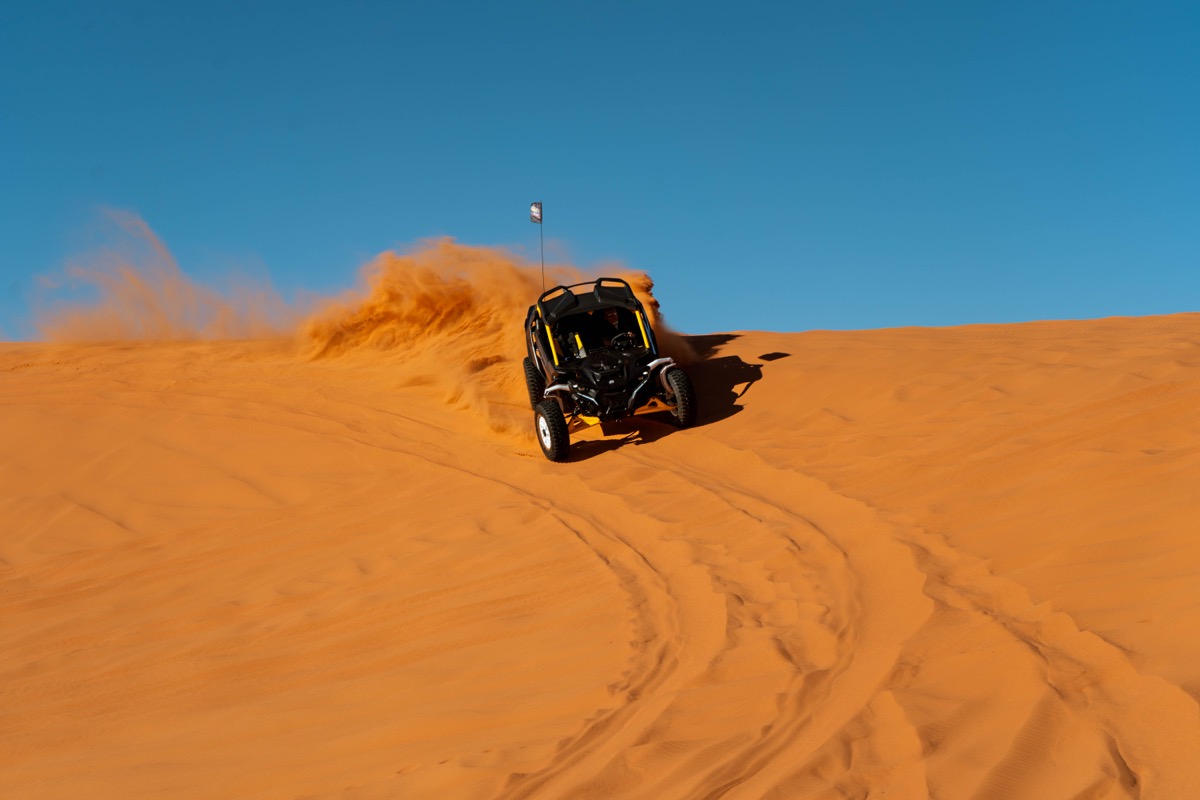
Climbing dunes at Sand Mountain — this is where paddle tires earn their keep. Stock all-terrain tires dig in and spin without forward progress on slopes like this.
Paddle Tires for Sand: Sand Hollow Dunes, Sand Mountain, and Coral Pink
If your UTV sees serious sand time, paddle tires aren't optional — they're the difference between riding and getting stuck. Sand is fundamentally different from every other surface: there's no hard substrate to push against. Your tires have to scoop and throw sand backward to create forward motion, the same way a boat propeller works in water.
That's exactly what paddle tires do. The raised scoops on the tread surface grab sand and fling it rearward, creating thrust. The wider the paddle, the more sand it moves per revolution. A smooth, treaded all-terrain tire on deep sand just digs a hole and spins — your engine works harder, your belt heats up, and you go nowhere.
Where You Need Paddles in Southern Utah
Sand Mountain (Jericho): This is the most demanding sand riding in the region. Deep, loose sand dunes with steep faces and soft valleys between them. Paddle tires are non-negotiable here. This is not the place to "see how your all-terrains do."
Sand Hollow — dune areas: The sand sections at Sand Hollow State Park are less extreme than Sand Mountain but still punishing on the wrong tires. The sand here is finer and mixed with red desert grit, and it sits alongside slickrock — which means many riders swap tires at the trailhead depending on the plan for the day.
Coral Pink Sand Dunes: The sand here is unique — fine, compacted Navajo sandstone that's pink-orange in color. It's denser than Sand Mountain sand, which means paddles still help enormously but the tire doesn't need to be as aggressive. Some riders run all-terrain tires here successfully, but paddles make a dramatic difference on the steeper dune faces.
The Classic Dune Setup
The proven sand configuration for a UTV is paddle tires on the rear axle and ribbed sand tires on the front. The paddles provide all the forward drive, while the ribbed fronts cut through sand and give you directional steering control. Running paddles on all four corners is unnecessary and makes steering feel vague — the front tires need to slice, not scoop.
For most Can-Am models, a 2-paddle or 4-paddle rear tire in 30 to 32 inches works well. The number of paddles affects how the tire hooks up: fewer paddles dig deeper for maximum forward bite in very loose sand, while more paddles spread the load and feel smoother at higher speeds on harder-packed sand. Two-paddle tires are the traditional choice for hill climbs and deep dune riding. Four-paddle designs offer a better compromise between traction and ride quality.
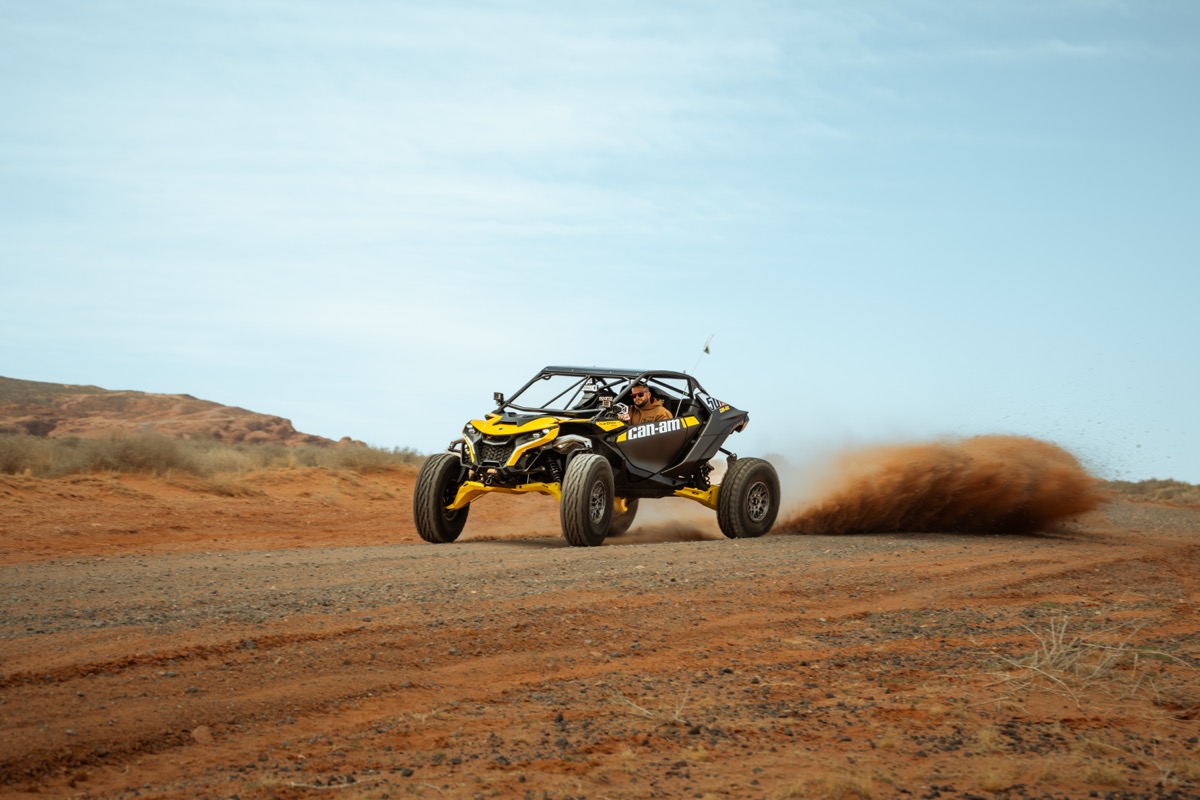
Coral Pink Sand Dunes — the sand here is denser than Sand Mountain, but paddle tires still make a dramatic difference on the steeper faces and in the softer pockets between dune ridges.
Rock-Crawling Tires: Sand Hollow Slickrock, Paiute Trail, and Mountain Terrain
Rocky terrain demands the opposite of what sand requires. Instead of scooping loose material, the tire needs to grip hard surfaces through compound adhesion and tread pattern contact. The best UTV tires for rock crawling share a few characteristics:
Hard, sticky compound: A softer compound conforms to rock surfaces and increases the contact patch. Think of it like a rock climbing shoe — it works by deforming around the surface rather than pressing against it.
Aggressive tread with wide spacing: Large tread blocks with deep channels between them grab rock edges and ledges. Close-spaced tread patterns look aggressive but pack with mud and lose grip quickly.
Reinforced sidewalls: Rocky trails punish sidewalls. Sharp rock edges, ledge drops, and pinch flats from impacts are the primary tire failures on rock terrain. An 8-ply or 10-ply sidewall construction makes a meaningful difference.
Radial construction: Radial tires flex more than bias-ply tires, which means a larger footprint on uneven surfaces. Most modern UTV rock tires are radial for this reason.
Where You Need Rock Tires in Southern Utah
Sand Hollow — slickrock and red rock trails: The rock sections at Sand Hollow are Navajo sandstone — grippy when dry, treacherous when wet. A good rock tire grips the textured surface confidently and handles the transitions between rock shelves and sandy washes.
Paiute Trail system: Over 2,000 miles of designated trail through mountain terrain with everything from packed dirt to loose shale to granite ledges. Sidewall protection is critical here — the rocky sections will find any weak point in your tire.
Brian Head and Duck Creek: Mountain trails with a mix of forest floor, rocky climbs, and occasional shale. A good all-terrain tire with rock-capable construction handles these trails well. For more on the best UTV trails in Southern Utah, see our complete trail guide.
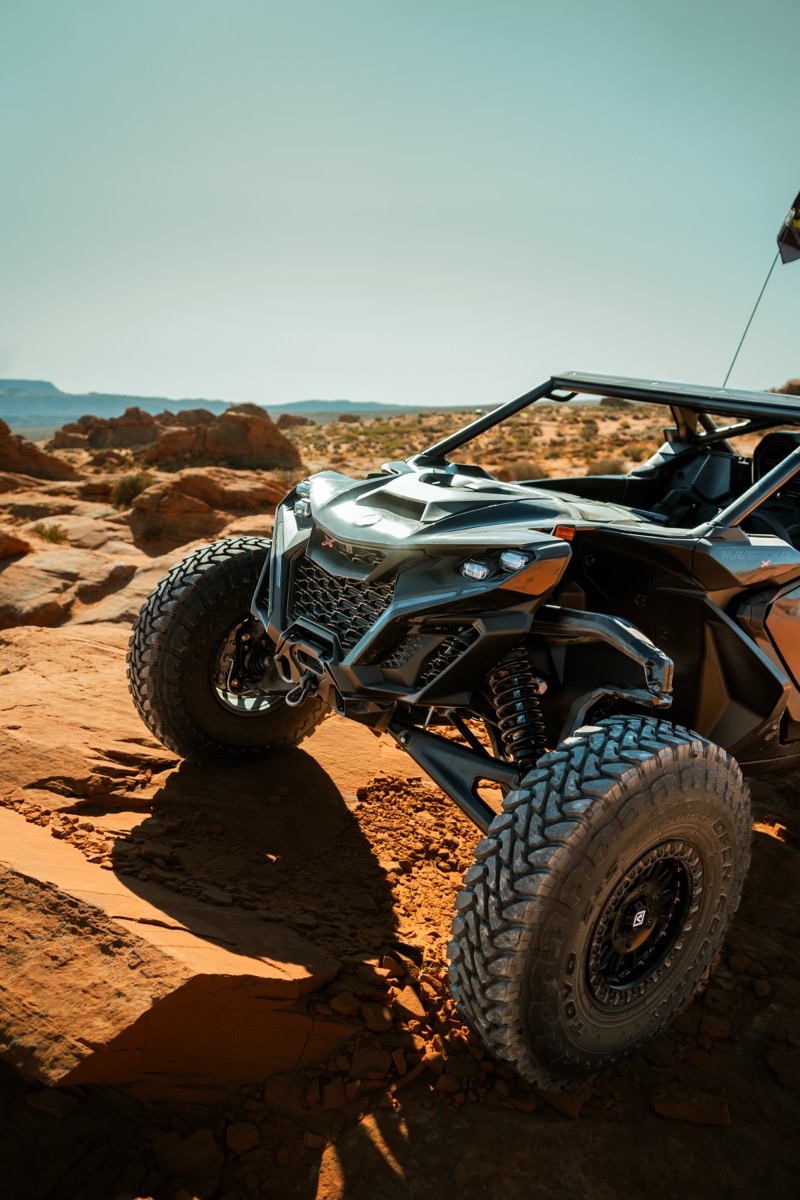
Rocky terrain in Southern Utah puts serious demands on UTV tires — sidewall strength and compound grip matter more here than tread pattern alone.
All-Terrain Tires: The Compromise That Works for Most Riders
Here's the reality for a lot of riders: you don't exclusively ride sand or exclusively ride rock. A typical weekend might include some trail riding to a sand area, a few hours on the dunes, then some rock-hopping on the way back. If you're not willing to carry two sets of tires or swap at the trailhead, a quality all-terrain tire is the practical answer.
The best all-terrain UTV tires for Southern Utah riding share these traits:
8-ply rating minimum: The rocks here will chew through a 6-ply tire. 8-ply gives you sidewall protection without making the tire overly stiff.
Aggressive but open tread pattern: You need tread blocks big enough to grab rock edges, spaced far enough apart that they shed sand and mud. Tires that pack with material lose traction on both surfaces.
Moderate weight: Heavier tires soak up more engine power and heat up the CVT faster. A tire that balances puncture resistance with reasonable weight is the sweet spot.
Predictable side-bite: Southern Utah trails have sidehills and off-camber sections. A good all-terrain tire grips laterally, not just fore and aft.
Popular all-terrain choices we see regularly on machines coming through the D&P Performance shop include the Maxxis Carnivore (factory tire on many Can-Am models), ITP Coyote, Sedona Rock-A-Billy, and Tensor Regulator — each with slightly different strengths depending on whether you lean more toward sand or rock in your typical riding mix.
Tire Sizing and Bolt Patterns for Can-Am Models
Getting the right tire size and wheel fitment for your specific machine matters more than most riders realize. Running the wrong offset, bolt pattern, or tire diameter affects handling, puts stress on wheel bearings and CV joints, and can cause rubbing at full steering lock or full suspension compression.
Common Can-Am Specifications
Most current Can-Am UTVs run a 4x137mm bolt pattern with 12mm x 1.5 lugs. This is consistent across the Maverick X3, Maverick R, Commander, and Defender lines, which makes wheel swapping between models straightforward. However, offset and tire size vary:
Maverick X3 (base/DS): Typically 30-inch tires on 14-inch wheels. Plenty of clearance to move to 32-inch tires without a lift.
Maverick X3 (X RS): Factory 32-inch Maxxis Carnivore tires on 15-inch wheels. Can run 33-inch tires without modification; 35-inch requires suspension work.
Maverick R: 32-inch tires on 15-inch wheels from the factory. Similar clearance to the X3 X RS for upgrades.
Commander: 27-28 inch tires on 14-inch wheels stock. Room to go to 30-inch without issues.
Defender: 27-30 inch tires depending on trim. The Defender's utility focus means tire choices often prioritize durability and load rating over aggressive tread.
Wheel offset is the measurement that trips up the most buyers. It determines how far the wheel sits in or out from the hub face. Factory spec on most Can-Am models is 5+2 or 6+1 (the first number is inches from the hub mounting surface to the outside of the wheel, the second is inches to the inside). Running wider offset pushes the wheels out further for a wider stance, which looks good but increases stress on bearings and CV joints. Running narrower offset tucks them in, which can cause rubbing on suspension components.
If you're unsure about fitment, bring your machine by D&P Performance. We can measure your current setup and recommend tire and wheel combinations that fit correctly without surprises. This is the kind of thing where getting it right the first time saves money — a wheel that doesn't fit right causes damage that's more expensive than the wheel itself.
Beadlock Wheels: When and Why They Matter
Standard UTV wheels rely on air pressure to keep the tire bead seated on the rim. That works fine at normal operating pressures — 12 to 18 PSI for most UTV tires. But the whole point of airing down for rock crawling or sand riding is to increase the tire's contact patch by letting it spread out. When you drop below 8-10 PSI on a standard wheel, you're risking a bead separation. One hard corner, one side-hill, one impact — the tire rolls off the rim and you're done for the day.
Beadlock wheels solve this mechanically. An outer ring bolts to the wheel and physically clamps the tire bead between the ring and the wheel lip. The tire stays seated regardless of air pressure. You can run 4-5 PSI on a beadlock wheel and the bead isn't going anywhere.
Where Beadlocks Make the Biggest Difference
Sand Hollow slickrock: Airing down to 6-8 PSI transforms how your tires grip sandstone. The tire conforms to the rock surface, and the larger contact patch dramatically improves traction on steep climbs and off-camber traverses. Without beadlocks, those pressures are a gamble.
Deep sand at Sand Mountain: Lower pressure in sand increases flotation and prevents the tire from digging in. Beadlocks let you run softer without worrying about losing a bead in the middle of a dune field.
Rocky mountain trails: The Paiute Trail and mountain riding around Brian Head and Duck Creek have rock impacts that can unseat a bead at normal pressure. Beadlocks are insurance against trail-ending flats.
Beadlock wheels come in aluminum and steel. Aluminum is lighter (less unsprung weight, which improves suspension response) and more expensive. Steel is heavier but nearly indestructible and significantly cheaper. For most recreational riders, aluminum beadlocks are the better choice unless you're on a strict budget. D&P Performance stocks beadlock wheels in common Can-Am bolt patterns and can mount, balance, and install your complete tire and wheel package.
Tire Pressure Tips for Different Terrain
The air pressure in your tires changes how they perform more than most riders appreciate. Here are the general ranges that work well for Southern Utah terrain — but always start conservative and adjust based on feel and conditions:
Highway/trailer loading: Run factory-recommended pressure (typically 14-18 PSI). This is about load rating and heat management, not trail performance.
General trail riding (packed dirt, gravel): 10-14 PSI. Dropping a few pounds from highway pressure smooths the ride and improves traction without compromising tire integrity.
Rocky terrain (Sand Hollow rock, Paiute Trail): 8-12 PSI. Lower pressure lets the tire wrap around obstacles and increases grip. Below 8 PSI, use beadlock wheels.
Sand dunes (Sand Mountain, Coral Pink): 10-15 PSI on paddle tires. Paddles are designed to work at moderate pressure — too low and the paddle scoops deform and lose efficiency. Ribbed fronts can run slightly lower for better flotation.
Slickrock (Sand Hollow): 5-8 PSI with beadlock wheels. This is where low pressure makes the most dramatic difference. The tire conforms to the rock texture and grips like a climbing shoe. Requires beadlocks.
Important: Always re-inflate to proper pressure before loading on a trailer for highway transport. Running on the highway at trail pressures generates excessive heat and can cause blowouts. Carry a portable compressor — it's as essential as a spare belt in Southern Utah.
When to Swap Tires vs. Run All-Terrain
The honest answer depends on how you ride and how much hassle you're willing to tolerate.
Run dedicated tires if:
You ride Sand Mountain or Coral Pink more than a few times per season — the performance difference with paddles is dramatic
You do serious rock crawling at Sand Hollow and want to air down aggressively
Racing or competitive riding where every bit of traction matters
You have the storage and trailer space for a second set of mounted tires
Run quality all-terrain tires if:
You ride a variety of terrain and don't want to carry or swap multiple sets
Most of your riding is mountain trails with occasional sand or rock
You prioritize convenience and versatility over peak performance on any single surface
You're on a budget and need one tire to cover all conditions reasonably well
A practical middle-ground approach: run a good all-terrain tire as your daily setup, and keep a set of paddle tires on wheels ready to swap for dedicated sand days. The swap takes 20-30 minutes with a floor jack and impact wrench, and the performance gain in sand is worth it.
Why Professional Mounting and Balancing Matters
We get it — you can buy tires online for less, and there are YouTube videos showing how to mount them in your garage with tire irons and a ratchet strap bead seater. Some riders do exactly that. But here's what usually gets skipped in the DIY approach:
Bead seating: A professional tire machine seats the bead evenly around the entire circumference. Hand-mounting with tire irons can nick or scratch the bead seat area, which creates slow leaks that appear weeks later — often on the trail when it's most inconvenient.
Balancing: UTV tires are heavier and less precisely manufactured than car tires. An unbalanced UTV tire may not be noticeable at 15 MPH on a trail, but at 50+ MPH on a desert straightaway or highway, the vibration is significant. Over time, that vibration accelerates wear on wheel bearings, tie rod ends, and ball joints — components that are expensive to replace.
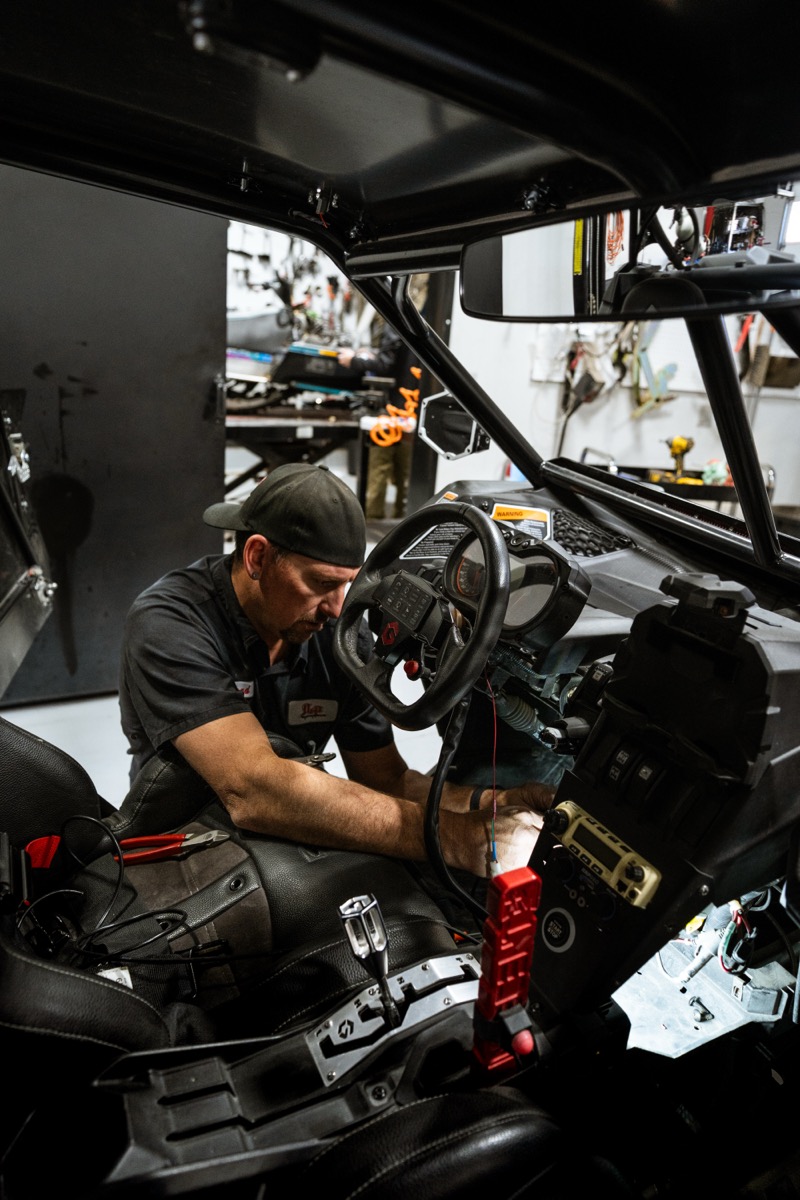
Inspection: When we mount a tire at D&P Performance, we inspect the wheel for damage, check the valve stem, verify the bead seat is clean and undamaged, and confirm the tire is rated for your machine's weight and speed. That two-minute inspection catches problems before they become failures.
And if you buy tires somewhere else, we'll still mount and balance them for you. You don't have to purchase from us to get professional installation — just bring them in.
Shop UTV Tires and Wheels at D&P Performance
D&P Performance carries tires, wheels, and complete tire-and-wheel packages for Can-Am UTVs and most other powersports brands. We can order anything not in stock, usually with next-day or two-day delivery. Our parts department can look up the exact fitment for your machine and help you choose the right setup for how and where you ride.
Every tire purchase includes professional mounting and balancing on our powersports-specific equipment. We check bead seating, balance, and overall fitment before your tires leave the shop.
If your current tires are worn, damaged, or just wrong for the terrain you're riding this fall — or if you want a dedicated sand or rock setup for the season — contact us or call (435) 586-5172 to talk to our parts team. We're at 905 S Main St in Cedar City — your closest authorized Can-Am dealer and the shop that knows Southern Utah terrain firsthand.
What are the best UTV tires for riding Sand Hollow?
It depends on which part of Sand Hollow you're riding. For the sand dune areas, paddle tires on the rear with ribbed fronts give you the best traction. For the slickrock and red rock trail sections, a tire with a hard, sticky compound and aggressive tread pattern grips the sandstone surface. If you split time between sand and rock, a quality 8-ply all-terrain tire works as a compromise — but it won't match a dedicated tire on either surface. Many Sand Hollow regulars keep two sets of mounted tires and swap at the trailhead. D&P Performance can help you choose the right setup.
Do I need beadlock wheels on my UTV?
If you air down below 8-10 PSI for rock crawling or sand riding, beadlocks are strongly recommended. Standard wheels rely on air pressure to keep the tire bead seated — drop the pressure too low and the bead can separate during hard cornering or impacts, leaving you stranded. Beadlock wheels mechanically clamp the bead to the rim, so the tire stays put regardless of pressure. They're essential for serious rock crawling at Sand Hollow (where 5-8 PSI dramatically improves grip) and a smart investment for any rider who airs down regularly.
What tire size fits a Can-Am Maverick X3?
Stock sizes vary by trim: base and DS models typically run 30-inch tires on 14-inch wheels, while X RS models come with 32-inch Maxxis Carnivore tires on 15-inch wheels. The bolt pattern across all Maverick X3 models is 4x137mm with 12mm x 1.5 lugs. Most X3 owners can move to 32 or 33-inch tires without a lift kit, but 35-inch tires usually require suspension modifications. Wheel offset (typically 5+2 or 6+1 from the factory) is critical to get right — wrong offset causes bearing wear and potential rubbing. Bring your machine to D&P Performance and we'll verify the exact specs for your model year.
How much do UTV tires cost?
Quality all-terrain UTV tires in the 30-32 inch range typically run $600 to $1,000 for a set of four. Paddle tires for sand range from $150 to $300 each for rears, with ribbed fronts at $100 to $200 each. Premium rock-crawling tires with reinforced sidewalls cost $200 to $350 per tire. Beadlock wheels add $150 to $400 each. A complete mounted tire and wheel package generally falls between $1,500 and $3,000 depending on specs. Call D&P Performance at (435) 586-5172 for a quote on your specific machine.
Should I get my UTV tires mounted at a dealer or do it myself?
Professional mounting offers real advantages: a tire machine seats the bead evenly without risking damage to the bead surface or wheel, and balancing prevents vibration that causes premature bearing and suspension wear at higher speeds. Hand-mounting with tire irons can nick the bead seat and cause slow leaks. D&P Performance mounts and balances UTV tires on powersports-specific equipment and inspects every tire before it leaves the shop. We'll mount tires you bring in from elsewhere — you don't have to buy from us to get professional installation.