Can-Am Maverick X3 Service: What Owners Actually Need to Know
The Maverick X3 is one of the most capable sport UTVs ever built — and one of the most demanding to maintain properly. Here's the service knowledge that keeps X3 owners riding instead of waiting on parts.
D&P Performance
1 month ago
The Can-Am Maverick X3 is arguably the most capable factory sport UTV ever built. The Rotax turbo engine, the QRS-X CVT, the four-link rear suspension with 24 inches of travel — it's a machine that was engineered to push the limits of what a side-by-side can do. And it delivers on that promise every time you point it at a trail in Southern Utah.
But that capability comes with a catch: the X3 demands more from its maintenance program than most UTVs. The same engineering that makes it faster, lighter, and more capable also makes it less forgiving when service gets deferred or done wrong. We see it regularly at D&P Performance — machines that come in running rough, eating belts, or overheating, and the root cause is almost always the same: the maintenance schedule didn't match how the machine was actually being ridden.
This guide covers what X3 owners in Southern Utah actually need to know to keep their machines running the way Can-Am intended.
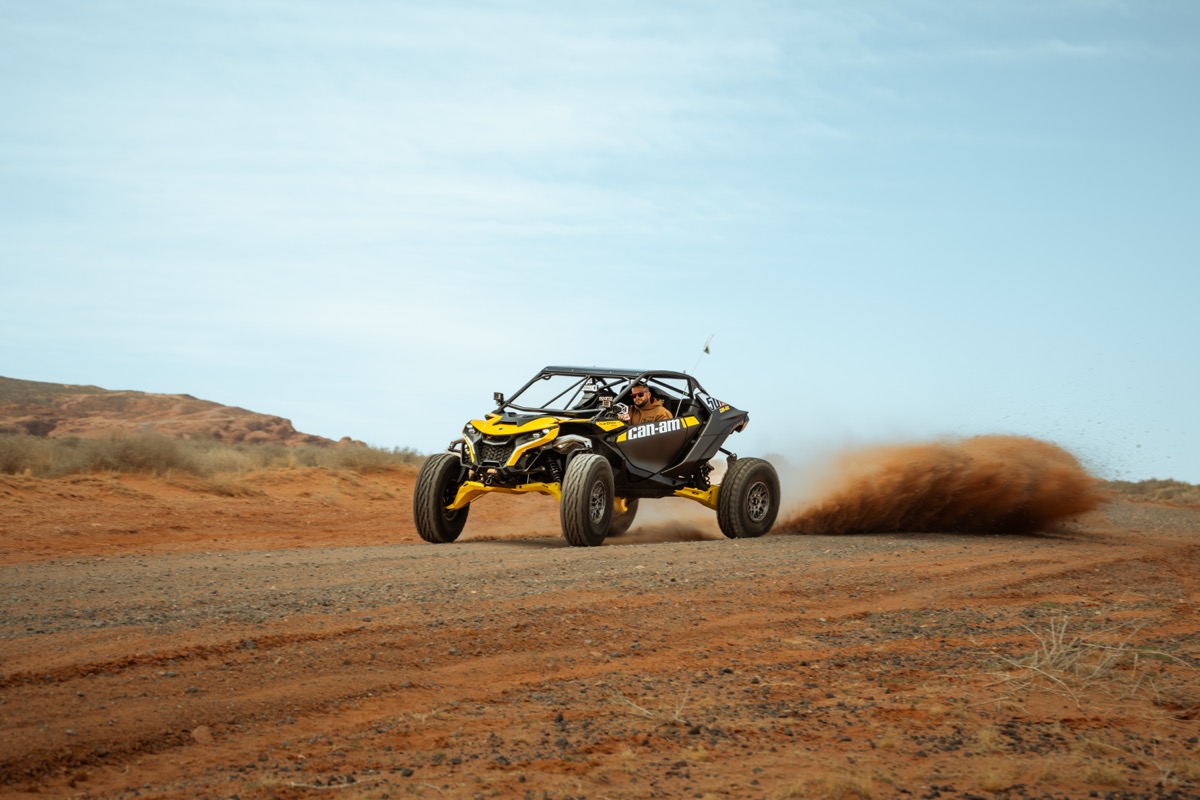
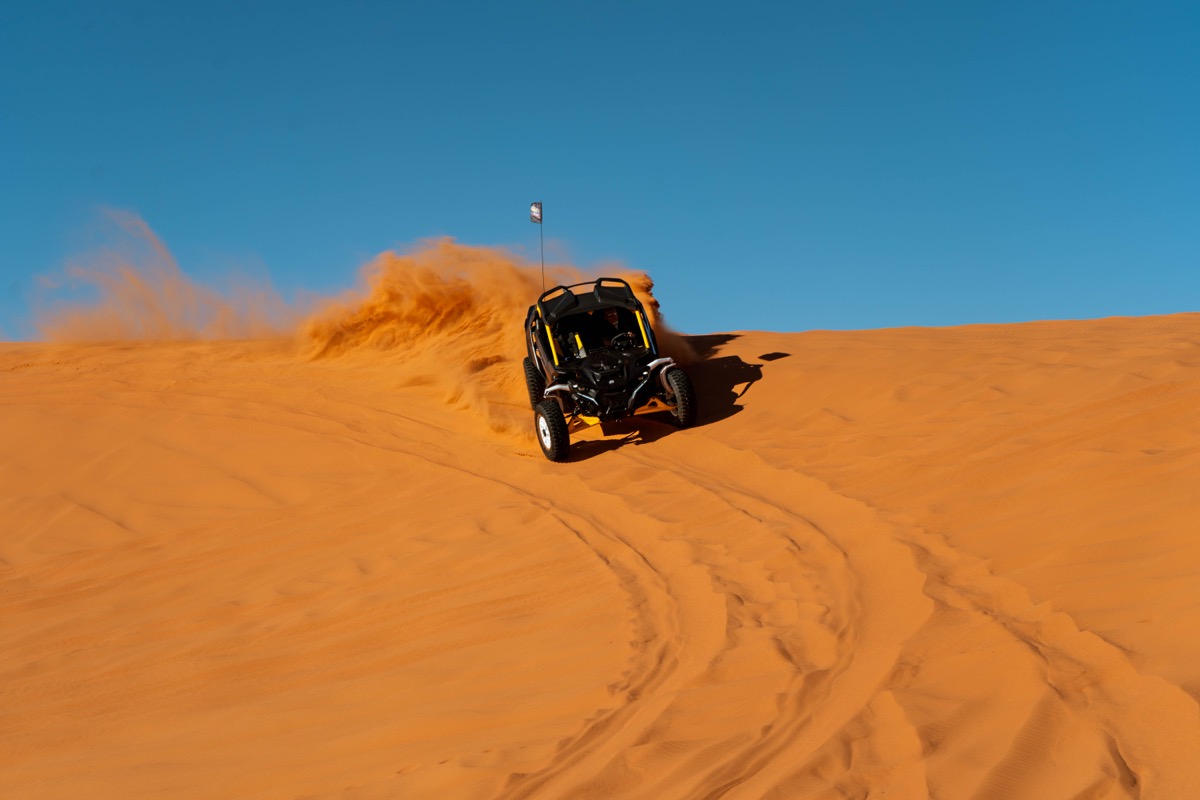
The Maverick X3 doing what it was built for — hard desert riding in Southern Utah. That dust rooster tail looks great in photos, but it's also the reason your air filter, CVT system, and radiator need more attention than the owner's manual suggests.
The CVT Belt: The Part Every X3 Owner Thinks About
If you own a Maverick X3, you already know about belt life. It's the single most-discussed maintenance topic in the X3 community, and for good reason — the CVT belt is both a wear item and a performance-critical component. When it's right, the X3's power delivery is seamless. When it's worn, slipping, or glazed, everything suffers: acceleration, top speed, heat management, and the longevity of the clutch system itself.
How Long Does an X3 Belt Actually Last?
The honest answer: it depends entirely on how and where you ride. We've seen belts last 2,500 miles on a machine that mostly sees moderate trail riding at reasonable speeds. We've also seen belts shred at 400 miles on a machine that spends its weekends doing high-speed dune runs at Sand Hollow or climbing rock at Sand Mountain.
The variables that kill belts fastest:
Sustained high RPM: Extended full-throttle runs in sand or open desert generate enormous belt heat. The belt is a friction component — the more heat, the faster it wears.
Aggressive throttle application: Slamming the throttle from a stop or at low speed causes belt slip before the clutch fully engages. That slip generates heat and glazes the belt surface.
Mud and water: Wet conditions reduce belt grip, causing slip. Sand and grit contaminate the clutch faces, accelerating belt wear from both sides.
Low-speed technical terrain: Rock crawling and slow technical riding keeps the CVT in its lower range where belt wrap is minimal and slip is highest. Ironically, going slow is harder on the belt than going fast at steady RPM.
Our recommendation for Southern Utah riders: inspect your belt every 500 miles, carry a spare on every ride, and don't wait for a failure to replace it. A belt that's glazed, cracked on the edges, or showing cord is on borrowed time. Replacing it proactively in the shop costs a fraction of what a trailside breakdown costs in time and frustration.
Belt Replacement Is Not Just Swapping the Belt
Here's what a lot of owners miss: when you replace a CVT belt, the clutch faces need to be cleaned and inspected. A new belt on contaminated or scored clutch sheaves will glaze prematurely and underperform. At D&P Performance, every belt replacement includes cleaning both the primary and secondary clutch faces with the correct solvent, inspecting the clutch sheaves for scoring or wear, checking the spring tension and helix condition, and verifying proper belt deflection after installation.
It takes longer than just swapping the belt. It also means the new belt lasts significantly longer and performs the way it should from the first ride.
Clutch Service: The System Behind the Belt
The QRS-X CVT on the Maverick X3 is a precision system — not just a belt and two pulleys. The primary clutch uses a combination of spring tension, roller weights, and helix geometry to control how the belt engages and shifts through its range. The secondary clutch uses a spring and helix to manage backshift and torque response. When these components wear or fall out of spec, belt life drops, power delivery gets inconsistent, and the system runs hotter than it should.
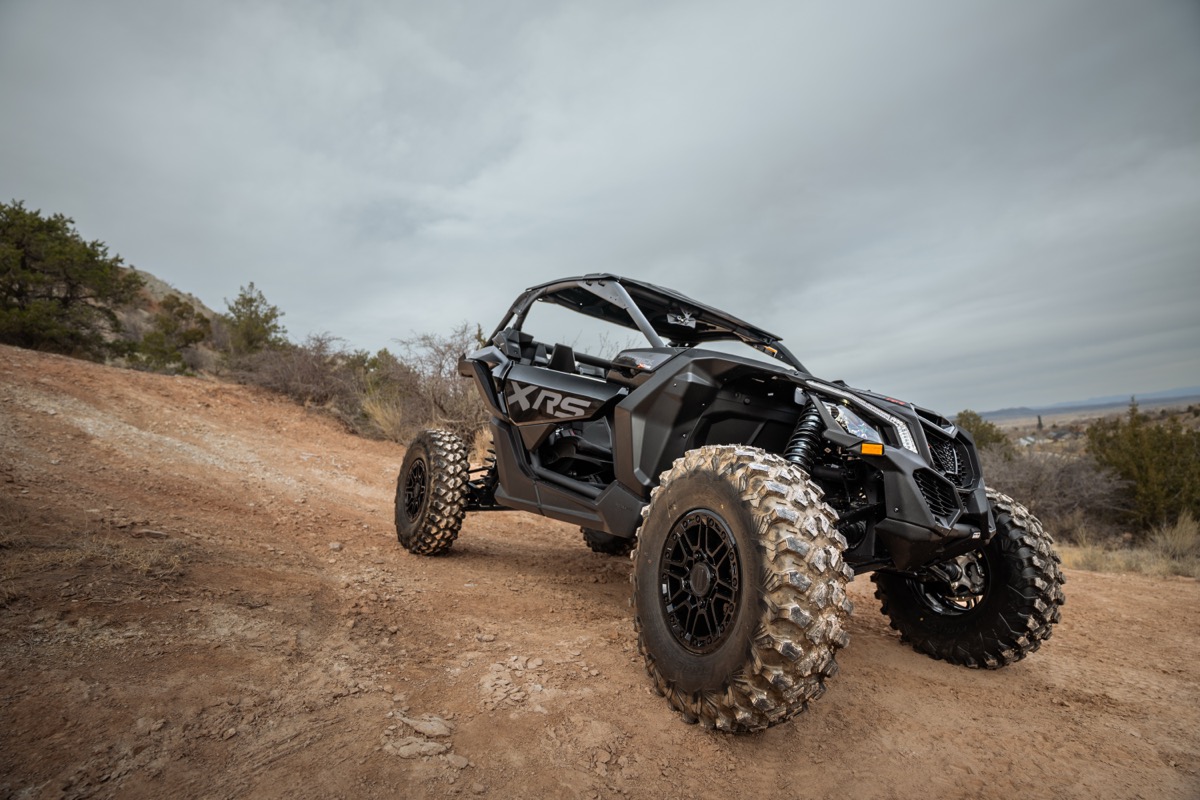
The X3 XRS suspension system — Fox 2.5 Podium shocks with 24 inches of rear travel. This level of engineering requires service intervals that match the capability. Bushings, bearings, and pivot points all need regular inspection.
When to Service the Clutch
BRP recommends clutch inspection at defined intervals in the owner's manual, but for the riding conditions in Southern Utah — heat, dust, sand, and rock — D&P Performance recommends a full clutch inspection every 1,500 miles or annually, whichever comes first. That inspection includes removing both clutches, cleaning and inspecting all wear surfaces, measuring spring free length against factory spec, checking the roller weights and bushings in the primary, inspecting the helix and cam in the secondary, and reassembling with the correct torque values.
This isn't a job most owners should attempt at home. The primary clutch requires a specific puller tool and a press to remove safely, and reassembly torque values are critical. Over-torquing the primary bolt is one of the most common DIY mistakes we see — it can crack the crankshaft taper or cause the clutch to run out of true.
Air Filtration: The Desert Is Trying to Kill Your Engine
The Rotax ACE turbo engine in the Maverick X3 breathes a lot of air — and in Southern Utah, that air carries a lot of fine particulate. Red rock dust, sand from Sand Hollow and Sand Mountain, and the fine alkaline dust that coats everything east of Cedar City all want to get past your air filter and into the intake tract. If they succeed, the damage is expensive: scored cylinder walls, worn piston rings, and a turbo that ingests abrasive material at 100,000+ RPM.
BRP's factory air filter system on the X3 is good — better than most competitors. But it requires discipline:
Inspect after every dusty ride. Not every oil change — every ride in dust. Pull the filter, tap it out, and look at the downstream side. If there's dust past the filter media, the seal isn't right or the filter is compromised.
Clean or replace on a condition basis, not a mileage basis. A filter that's been through two long rides at Sand Hollow may be more loaded than one that's done 500 miles on hardpack trail.
Check the intake boot and clamps. The turbo inlet tract has several connection points between the filter and the compressor inlet. A loose clamp or cracked boot bypasses the filter entirely — and you won't know it until the damage is done.
Never blow out a paper filter with compressed air. It opens microscopic holes in the filter media. If the filter is loaded, replace it.
Heat Management: Running an X3 in the Southern Utah Summer
Summer riding temperatures in Southern Utah regularly hit 100°F and above. At Sand Hollow, the combination of ambient heat, reflected heat off the sand and rock, and engine heat creates conditions that push the X3's cooling system hard — especially during low-speed technical riding where airflow across the radiator drops.
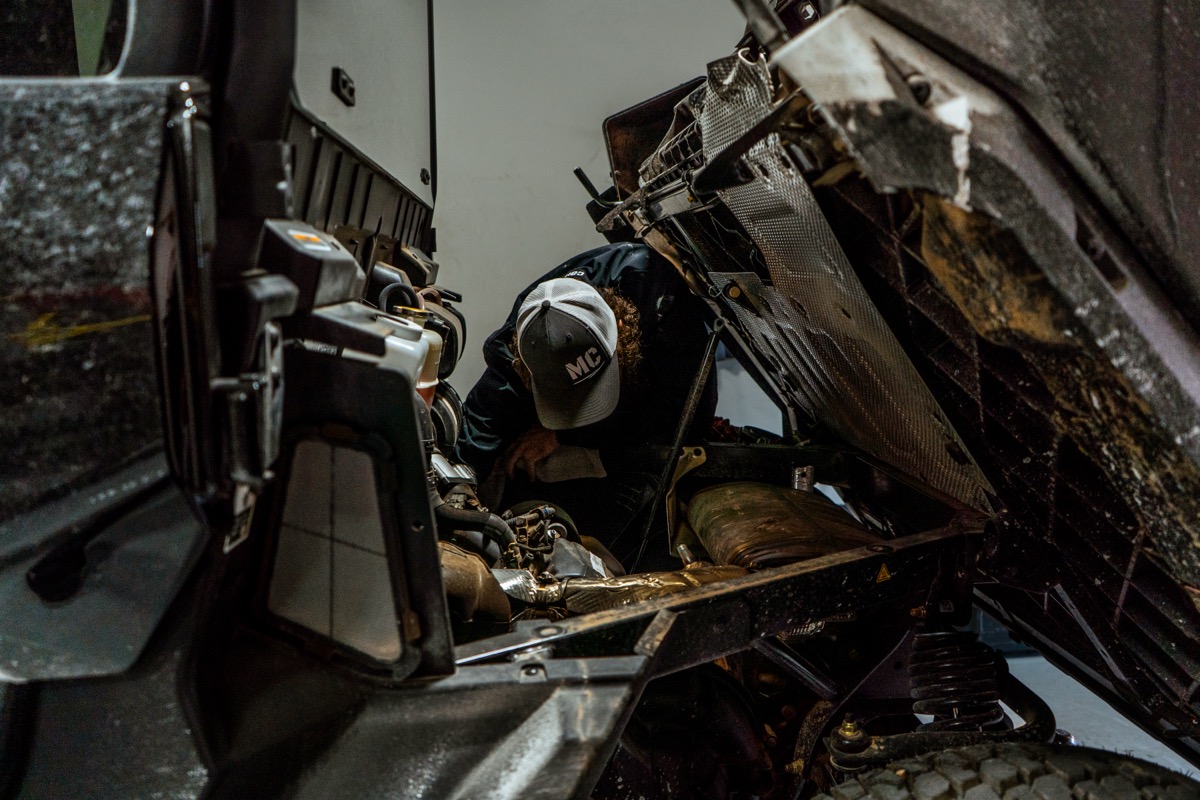
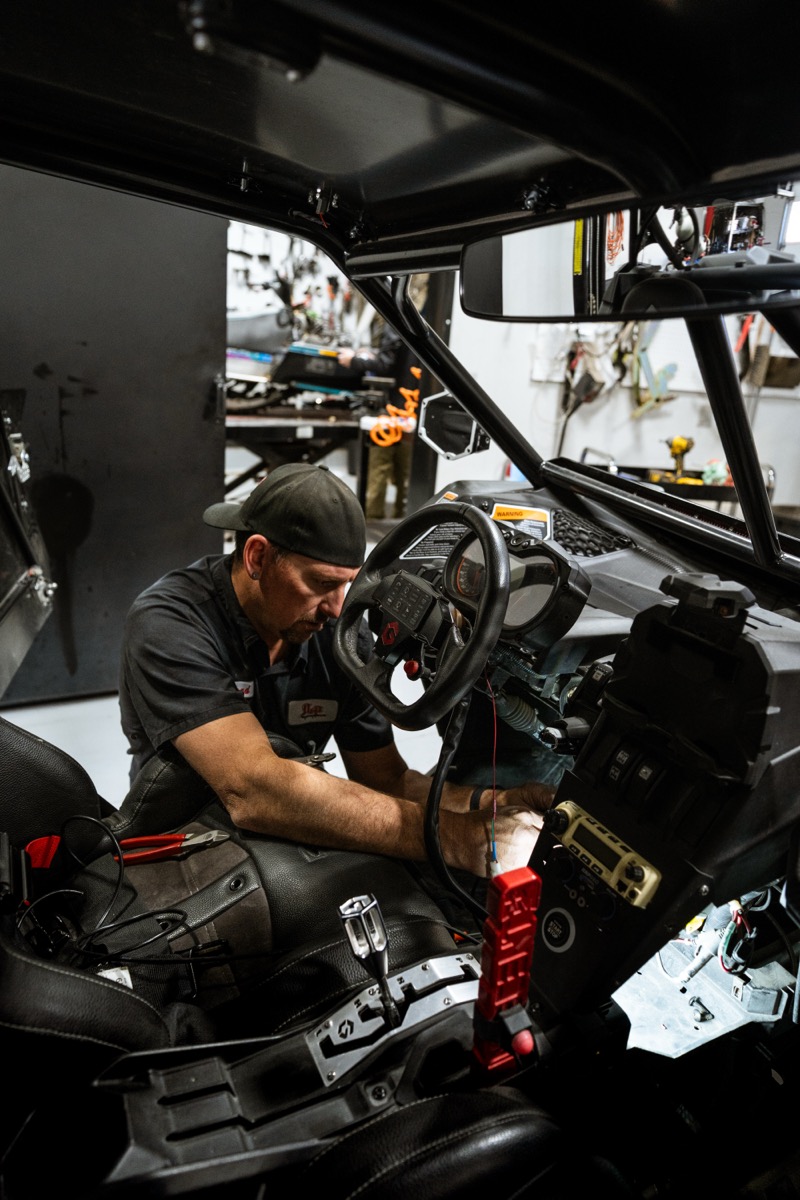
Factory-trained service at D&P Performance in Cedar City. The difference between a tech who knows the X3 platform and a general mechanic shows up in diagnostic accuracy, proper torque specs, and understanding the systems that make this machine different from everything else on the market.
What Causes Overheating
The most common causes we see at D&P Performance:
Packed radiator fins. Dust, mud, and debris accumulate in the radiator and reduce airflow. This is the number-one cause of elevated coolant temperatures, and it's entirely preventable with regular cleaning.
Old coolant. Coolant loses its heat transfer efficiency over time. BRP specifies XPS coolant for a reason — it's formulated for the Rotax engine's operating temperature range. Flush and replace annually.
CVT heat transfer. A slipping belt generates heat in the CVT housing, and that heat radiates into the engine bay. A belt that's worn or improperly tensioned can add significant thermal load to the overall system.
Fan issues. The radiator fan is electric and thermostatically controlled. If the fan relay, temperature sensor, or fan motor fails, the cooling system loses its ability to manage heat at low speed. We check fan operation as part of every X3 service.
Proactive Heat Management
Southern Utah X3 riders should clean the radiator after every dusty ride (a garden hose from the back side of the rad pushes debris out the way it came in), check the coolant level before every ride, flush coolant annually, keep the CVT system in good condition to minimize heat generation from belt slip, and avoid extended idle or low-speed operation in extreme heat when possible.
Suspension: 24 Inches of Travel Requires 24 Inches of Attention
The Maverick X3's suspension is one of its defining features — up to 24 inches of rear travel on the X3 X RS models, with Fox 2.5 Podium shocks that are adjustable for compression, rebound, and preload. It's a suspension system that was designed for Baja-level performance, and it delivers.
But suspension components wear. The pivot points, A-arm bushings, ball joints, tie rod ends, and radius rod bearings all operate under extreme loads in a harsh environment. Sand and grit accelerate bushing wear. Rock impacts stress ball joints. And suspension geometry that's shifted due to worn components changes how the machine handles — sometimes subtly, sometimes dangerously.
D&P Performance recommends a full suspension inspection every 1,000 miles or at the start of each riding season:
Check all ball joints and tie rod ends for play
Inspect A-arm bushings for cracking or deformation
Verify radius rod bearing condition
Check shock bodies for leaks or damage
Grease all greaseable fittings (the X3 has several that are easy to miss)
Verify wheel bearing condition — grab the tire at 12 and 6 o'clock and check for play
Worn suspension components don't just affect ride quality — they affect safety. A failed ball joint or tie rod end at speed is a serious event. Catching wear early is the entire point of scheduled inspection.
Oil Changes: More Often Than You Think
BRP's published oil change interval for the Maverick X3 is reasonable for moderate-climate trail riding. For Southern Utah conditions — heat, dust, and the kind of riding the X3 encourages — D&P Performance recommends oil and filter changes every 50 hours or 1,000 miles, whichever comes first.
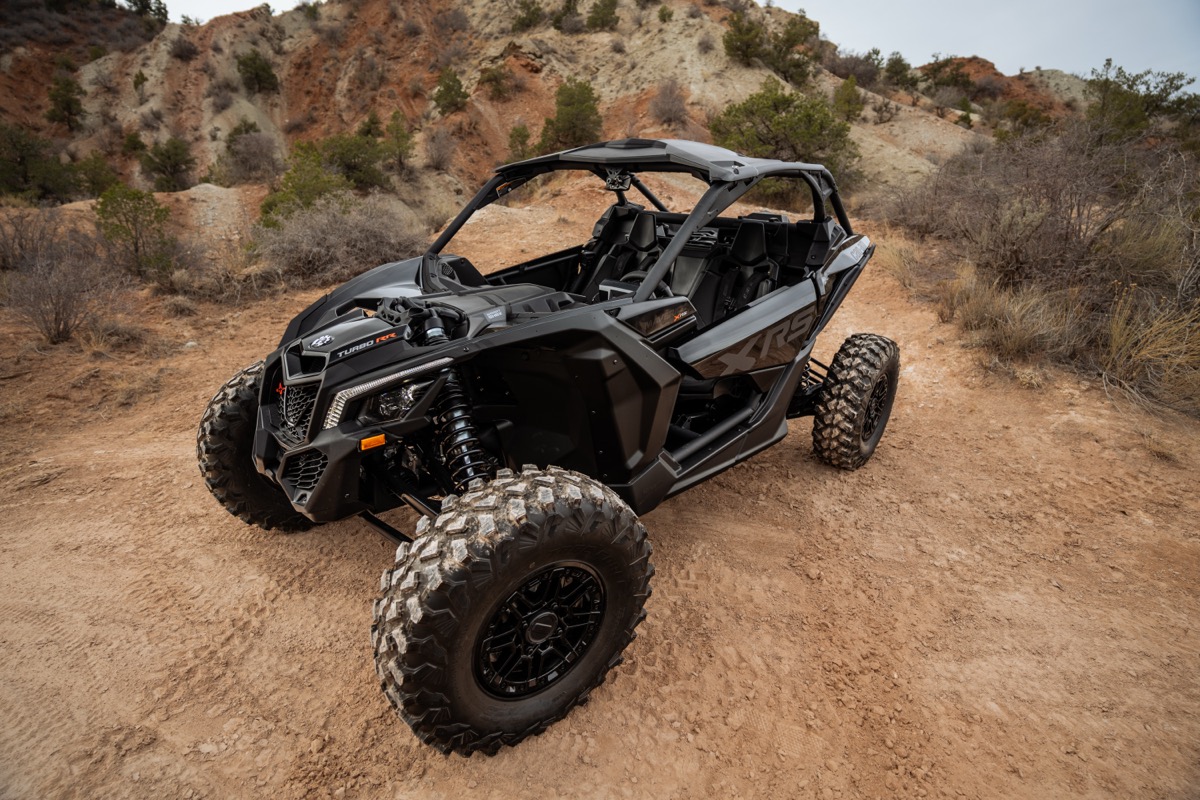
A Maverick X3 on a canyon trail outside Cedar City. The terrain looks beautiful — and it's demanding on every component from the air filter to the suspension bushings. Keeping up with service is what keeps you riding.
The Rotax turbo engine runs hot by design — the turbocharger adds significant heat to the oil, and desert ambient temperatures compound that. Oil that's been heat-cycled past its effective lifespan loses viscosity stability and its ability to protect bearing surfaces under load. Using BRP's XPS oil — which is formulated specifically for the Rotax engine family — matters here. Generic "full synthetic" oils may not meet the specific additive and viscosity requirements of the turbo Rotax platform.
While you're changing oil, check the differential fluids as well. Front and rear diff fluid should be changed every 1,500 miles or annually. It's an often-overlooked service item that's cheap insurance against differential wear.
Why Factory-Trained Service Matters on the X3
The Maverick X3 is not a machine where "any mechanic who works on ATVs" is good enough. The Rotax turbo engine, the QRS-X CVT, the Smart-Shox suspension (on equipped models), the CAN-bus electrical system, and the BRP diagnostic software are all specialized systems that require specific knowledge and tooling.
At D&P Performance, our technicians complete BRP's factory training program — not a generic powersports course, but manufacturer-specific training on the platforms we sell and service. That means access to BRP's diagnostic software (BUDS2), which can read fault codes, calibrate systems, and update firmware that a generic code reader can't touch. It means knowing the torque values, the service procedures, and the technical service bulletins that address known issues before they become failures.
The Bulloch family has been in the powersports business since 1978 — that's 48 years of mechanical knowledge passed down through a family that races these machines, not just sells them. The family's 169 race wins and 21 championships weren't earned by cutting corners on maintenance. That same approach — thorough, correct, no shortcuts — is what goes into every X3 that comes through the D&P Performance service bay.
The Bottom Line: Ride Hard, Service Smart
The Maverick X3 rewards owners who take care of it. The machine was built to perform at a level that most UTVs can't touch — and it will keep performing at that level for years if the service program matches the riding. Defer maintenance, skip inspections, or use the wrong parts, and the X3 will let you know about it in ways that are expensive and inconvenient.
If you're riding a Maverick X3 in Southern Utah and want factory-trained service from a team that knows this platform inside and out, contact D&P Performance or call (435) 586-5172 to schedule service. We're in Cedar City — 45 minutes from Brian Head, an hour from Sand Hollow, and closer to the northern trails than any other authorized Can-Am dealer in the region.
How often should I change the belt on a Can-Am Maverick X3?
Belt life varies significantly based on riding style and terrain. Aggressive desert and dune riding can wear a belt in 500–800 miles, while moderate trail riding may get 1,500–2,500 miles. D&P Performance recommends inspecting your belt every 500 miles regardless of riding style, and always carrying a spare. Signs of a belt nearing failure include glazing, fraying edges, visible cracks, or a rubber smell during normal riding.
What is the maintenance schedule for a Can-Am Maverick X3?
For Southern Utah riding conditions, D&P Performance recommends oil and filter changes every 50 hours or 1,000 miles, air filter inspection after every dusty ride, CVT belt inspection every 500 miles, front and rear differential fluid changes every 1,500 miles or annually, coolant flush annually, and a full clutch inspection every 1,500 miles. Desert riding is significantly harder on machines than the conditions BRP uses for its baseline factory intervals.
Where can I get factory-authorized Can-Am Maverick X3 service in Southern Utah?
D&P Performance in Cedar City, Utah is a factory-authorized Can-Am dealer with technicians trained on the Maverick X3 platform. Located at 905 S Main St, Cedar City, UT 84720, D&P Performance serves riders throughout Southern Utah. Factory-authorized service means BRP-trained technicians and genuine OEM parts for all repairs. Call (435) 586-5172 to schedule service.
Why does my Maverick X3 overheat in the desert?
The most frequent causes are packed radiator fins reducing airflow, old coolant with reduced heat transfer efficiency, low-speed technical riding that doesn't generate enough airflow, and a CVT system running hot due to belt slip. Clean the radiator after every dusty ride, flush coolant annually, and address belt condition proactively. If your X3 consistently runs hot, bring it to D&P Performance — there may be an underlying cooling system or CVT issue.
Should I use OEM or aftermarket parts on my Maverick X3?
For critical drivetrain and engine components — belts, clutch components, bearings, seals, and engine internals — D&P Performance strongly recommends genuine BRP OEM parts. The X3's Rotax engine and QRS-X CVT are precision-engineered, and aftermarket substitutes may not meet original tolerances. For accessories, skid plates, and cosmetic items, quality aftermarket options exist. For reliability and safety, OEM is the right call.
Tags:
Can-Am
Maverick X3
UTV Service
Maintenance
Cedar City
Southern Utah
CVT Belt
Clutch Service
Rotax Engine
Powersports Service