Riding Sand Hollow & Sand Mountain: A Rider's Guide
Two of Southern Utah's best riding destinations sit within 90 minutes of Cedar City — and they couldn't be more different. Here's what you need to know before you load the trailer for Sand Hollow or Sand Mountain.
D&P Performance
2 months ago
If you ride in Southern Utah, two destinations keep coming up in every conversation: Sand Hollow and Sand Mountain. They sit on opposite sides of Cedar City, they demand completely different machines and setups, and they deliver completely different experiences. Lump them together and you'll show up wrong for at least one of them.
We've been sending customers to both of these riding areas for decades from our Cedar City dealership. We know what works, what breaks, and what separates a great day from a frustrating one. This guide covers everything you need to plan a trip to either destination — access, permits, terrain, machine setup, and the stuff the state park website doesn't tell you.
Sand Hollow State Park: Red Rock Playground
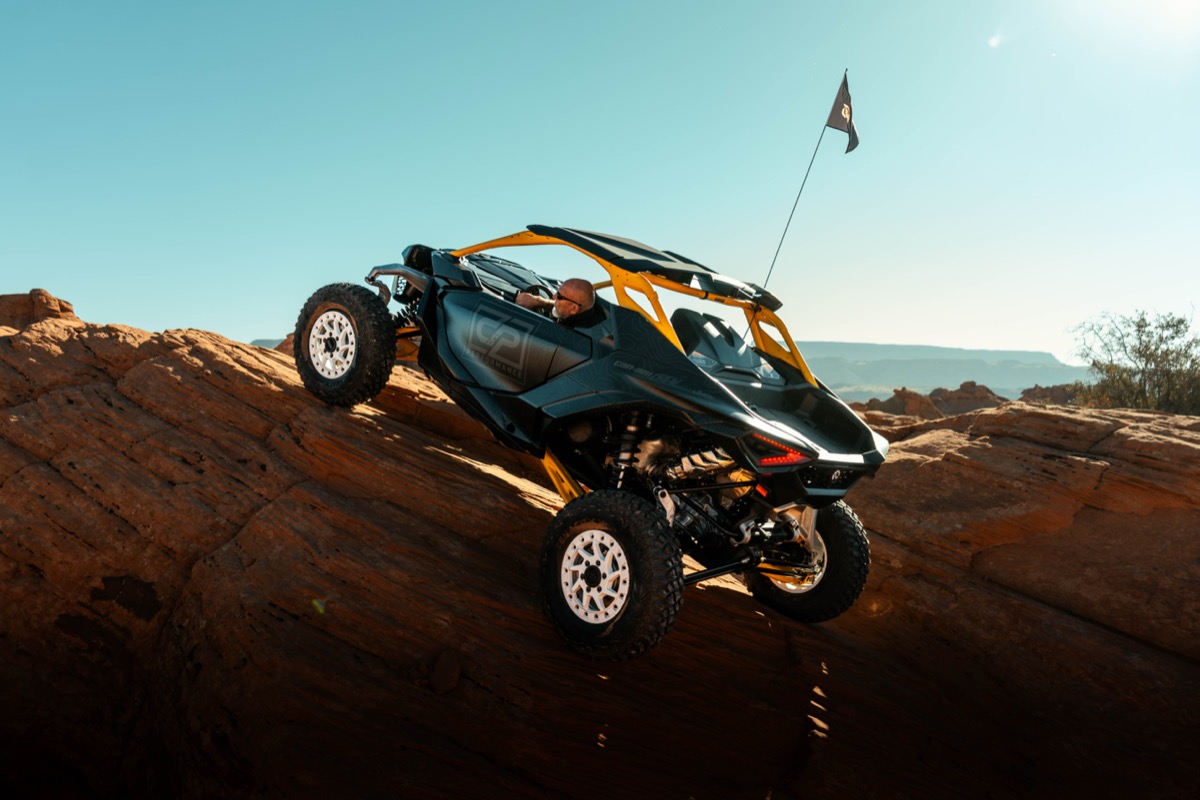
Sand Hollow's slickrock terrain rewards precise throttle control — one wrong line and you're walking back for a strap.
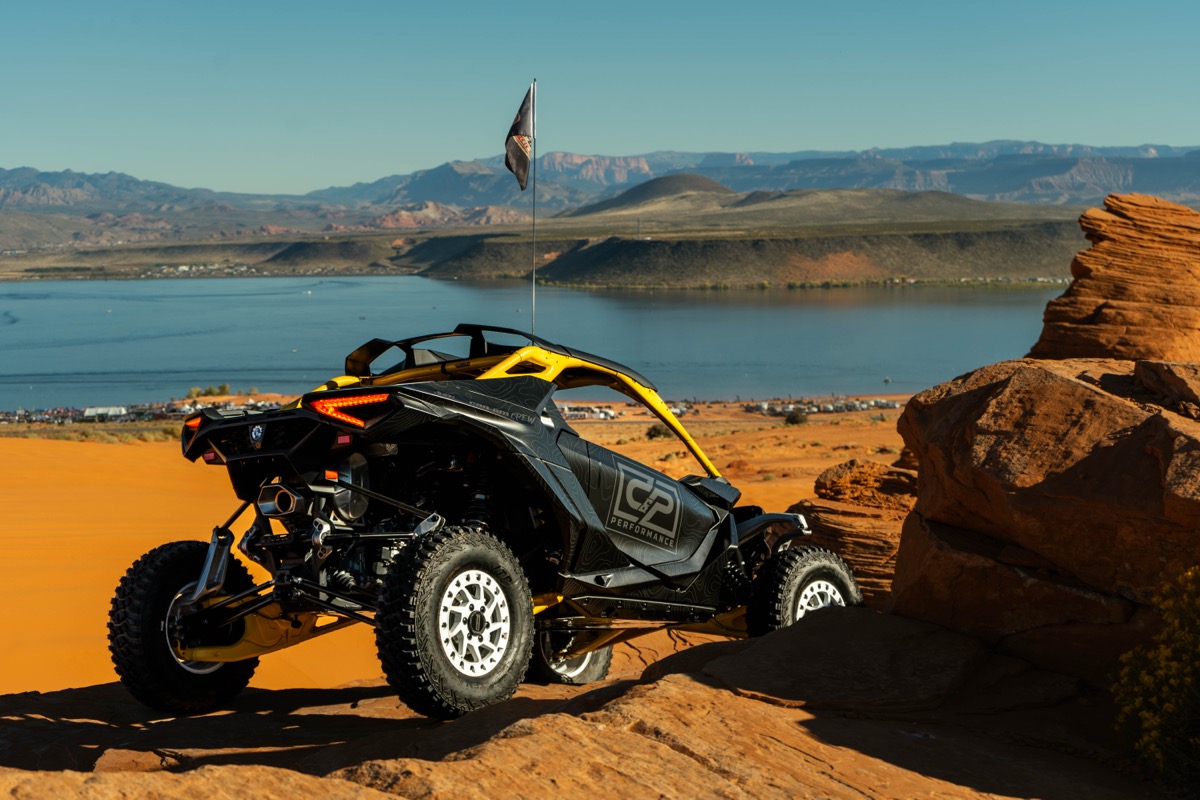
Sand Hollow State Park sits just south of Hurricane, about 55 minutes from Cedar City via I-15. It's 20,000 acres of red Navajo sandstone, open desert, and a reservoir that makes the backdrop look like it belongs in a tourism ad. The OHV riding area covers roughly 15,000 of those acres — enough terrain that you can ride all day and never loop the same trail twice.
What makes Sand Hollow special isn't size. It's the terrain. This is slickrock riding — smooth, undulating sandstone that flows like frozen waves across the landscape. You're climbing ledges, dropping into washes, navigating fins of rock that rise 20 feet on either side, and threading through gaps that test both your nerve and your spotter's patience. It's technical, it's visual, and it's unlike anything else in the state.
What You Need to Know Before You Go
Day-use fee: $20 per vehicle (2026), or use a valid Utah State Parks annual pass
Whip flag: Required on all OHVs in the park — minimum 8 feet from ground level
Hours: Open year-round, sunrise to sunset (overnight camping available with reservation)
Staging area: Multiple trailheads with parking for trucks and trailers along Sand Hollow Road
Fuel: None in the park — fill up in Hurricane or St. George before heading in
Best Areas to Ride
The West Side (Beginner to Intermediate): The terrain west of the reservoir offers more gradual slickrock slopes and wider trails. If this is your first time at Sand Hollow or you're breaking in a new machine, start here. The rock is forgiving, the sight lines are long, and you can build confidence before pushing into tighter terrain.
The Maze / East Side (Intermediate to Advanced): East of the main staging areas, the sandstone gets more vertical. Steeper ledges, tighter gaps, and more consequential drops. This is where experienced riders spend their time. You'll want a spotter for some of the steeper climbs, and you'll want rock sliders on the machine — the sandstone will eat unprotected rocker panels.
Sand Washes (All Levels): Between the rock formations, sandy washes cut through the landscape. These are the connecting trails between rock features, and they're where you can open up the throttle a bit. Standard all-terrain tires handle these fine — you don't need paddles for Sand Hollow.
Machine Setup for Sand Hollow
Sand Hollow rewards ground clearance and precise throttle control over raw power. You don't need 200 horsepower to climb a rock ledge — you need the right line and enough torque to walk the machine up without spinning. That said, the Maverick handles it beautifully if you keep the right foot measured.
Tires: All-terrain with aggressive sidewall. No paddles — they'll slide on slickrock
Skid plates: Non-negotiable. Full underbody protection saves expensive repairs
Rock sliders: Highly recommended for the east side terrain
Recovery gear: Tow strap, shackles, and a friend. You will get stuck eventually
Tire pressure: Drop to 8-12 PSI for better grip on rock surfaces
Sand Mountain: Wide-Open Dune Riding
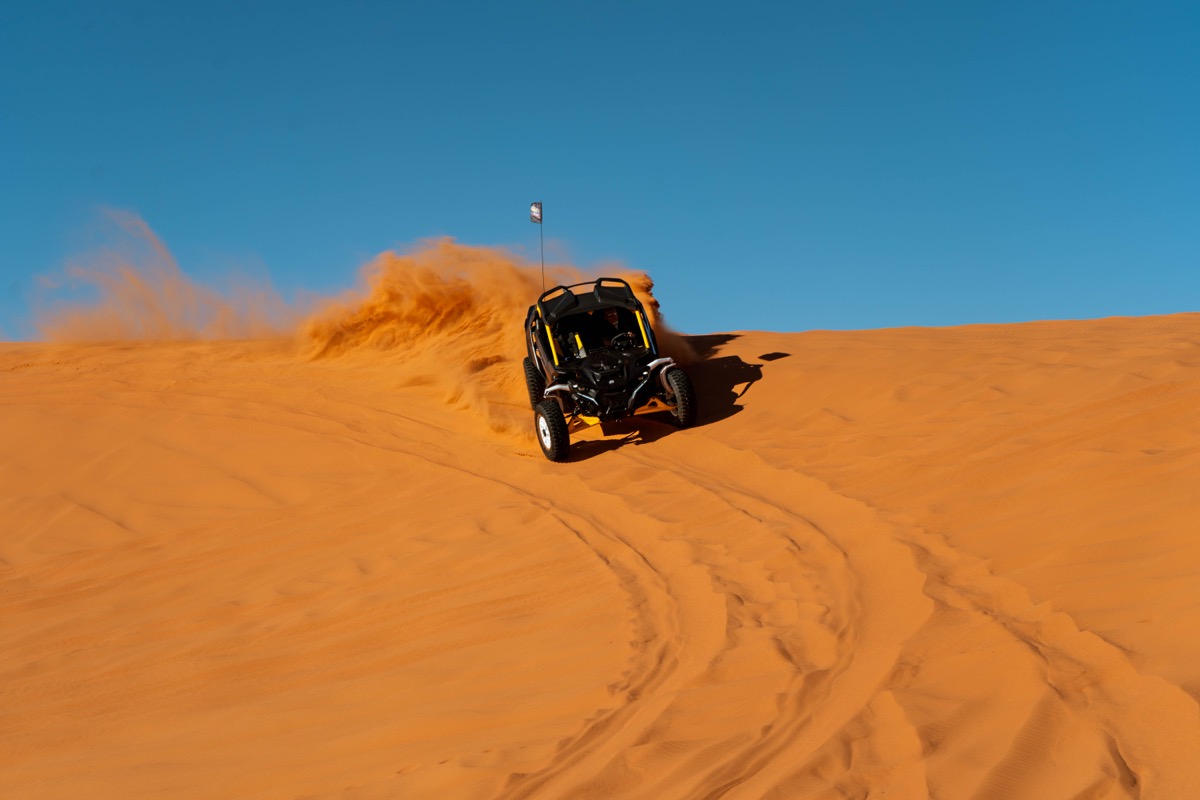
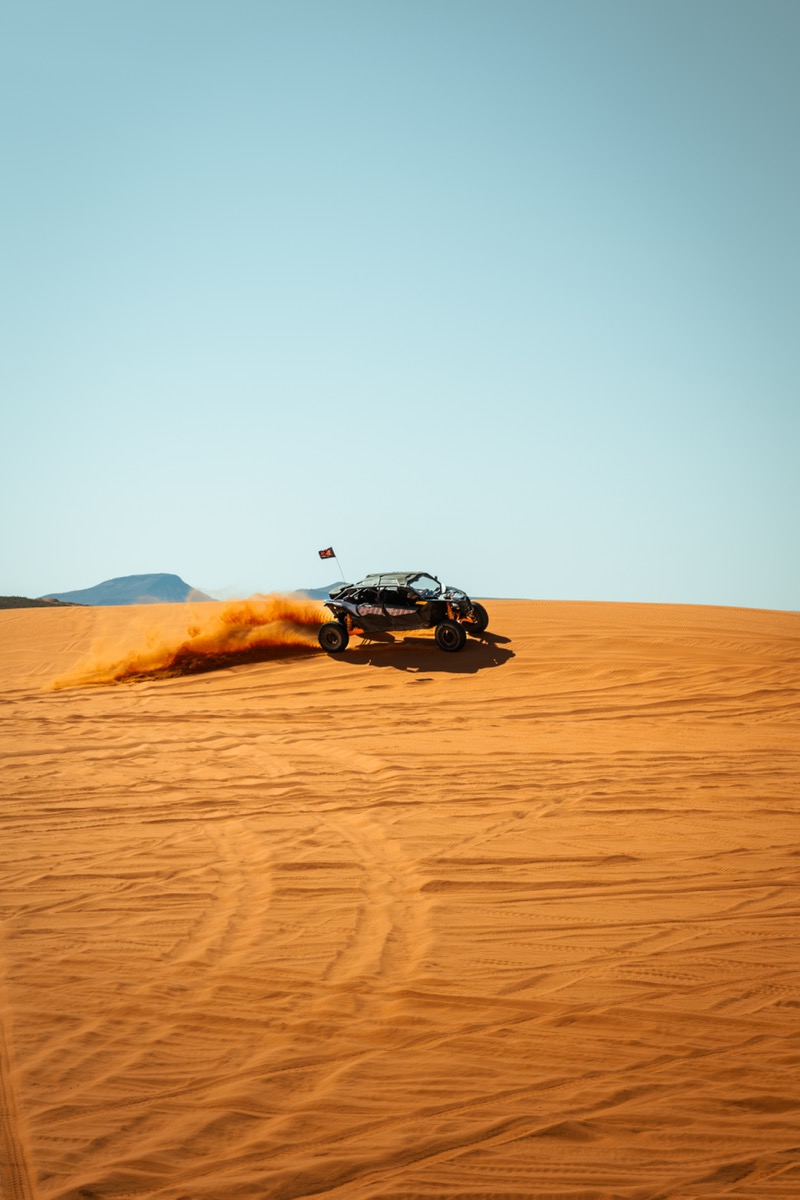
Sand Mountain's open dune faces reward horsepower and suspension travel — commit to the climb or don't start it.
Sand Mountain — also called the Little Sahara of central Utah or Jericho Sand Dunes depending on who you ask — is an entirely different animal. Where Sand Hollow is technical and precise, Sand Mountain is wide open and violent. Deep sand. Massive dune faces. No trees, no rocks, no guardrails. Just you, the machine, and gravity working out their differences at speed.
The main riding area covers thousands of acres of open dune terrain roughly 50 miles north of Cedar City along US-6. The dunes range from small rollers near the staging areas to massive faces that tower several hundred feet. It's the kind of terrain that separates machines designed for sand from machines that just happen to be sitting in it.
What You Need to Know Before You Go
Access fee: No fee for BLM-managed open riding areas; some developed staging areas may charge a small fee
OHV registration: Required — same Utah sticker as Sand Hollow
Whip flag: Absolutely critical here. Dune crests are blind — a flag is the only thing between you and a head-on collision over a ridge. Minimum 8 feet, 10+ feet recommended
Season: Rideable year-round, but spring and fall are prime. Summer heat makes deep sand even more demanding on machines and riders
Services: Nothing on-site. Bring fuel, water, tools, and a plan. The nearest services are in Delta (about 15 miles)
How Sand Mountain Rides
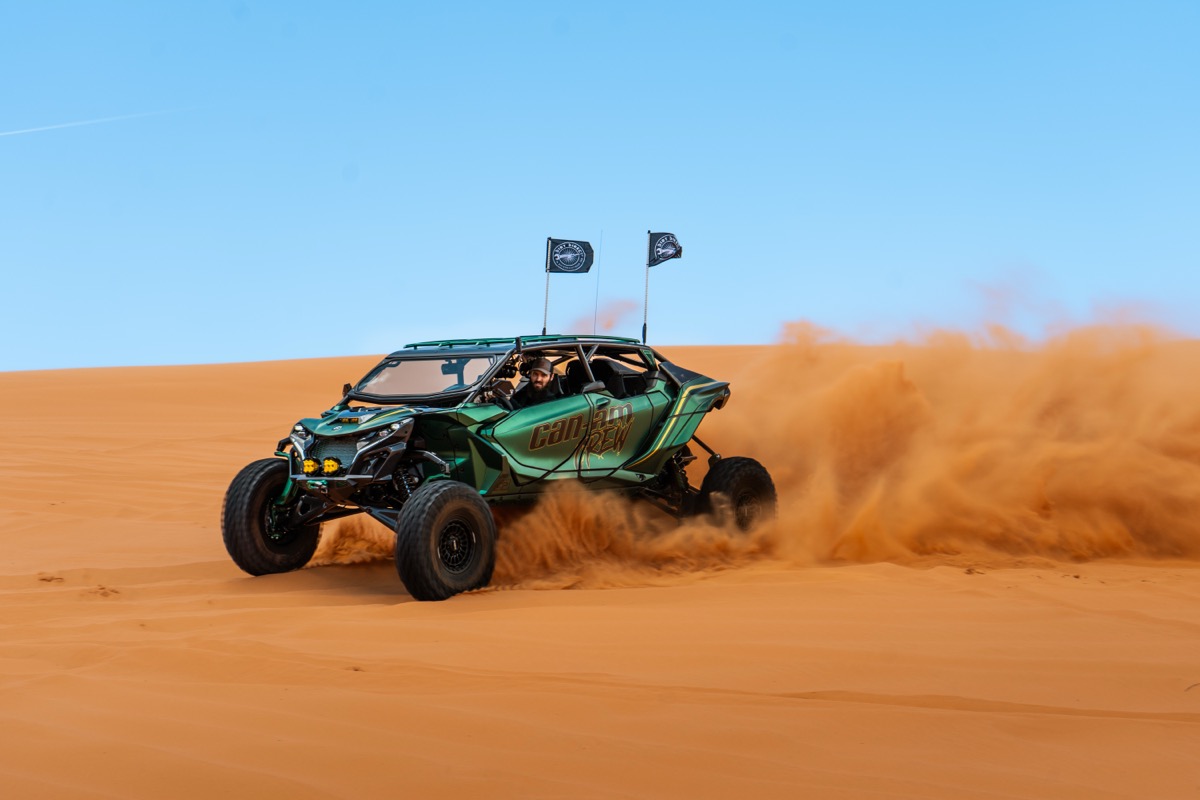
Deep sand at speed demands paddle tires, turbo power, and long-travel suspension — the Maverick X3 was built for exactly this.
Sand riding is a different skill set than rock crawling. Momentum is everything. You can't stop on a steep dune face and expect to restart — the machine digs in, the sand gives way, and you're sliding backward wondering how you're going to get turned around on a 40-degree slope.
The key rules for dune riding:
Commit to the line. If you're going up a dune face, maintain throttle. Hesitation buries you.
Never stop on a crest. You can't see what's on the other side. Someone might be climbing the opposite face at full speed.
Follow existing tracks on unfamiliar terrain. Other riders have already found the lines that work.
Watch the wind. Wind reshapes dune faces daily. A smooth face yesterday can have a razor-edge cornice today.
Ride with others. If you break down or get stuck in deep sand, you need someone to pull you out. There's no cell service on most of the dune field.
Machine Setup for Sand Mountain
This is where the Maverick X3 earns its price tag. The turbocharged Rotax maintains power when the engine is working hardest — pulling through deep sand at high RPM in 100-degree heat. The 25 inches of suspension travel absorbs the constant undulation of dune riding without punishing the chassis or your spine. A naturally aspirated utility UTV can ride Sand Mountain, but it won't enjoy it the way a sport machine does.
Tires: Paddle tires on the rear, ribbed sand tires on the front. This is not optional for serious dune riding
Air filter: Pre-filter or upgraded intake protection. Sand gets into everything
Cooling: Check coolant levels before every ride. Deep sand loads the engine harder than any other terrain
Spare belt: Carry one. Sand riding eats belts faster than rock crawling or trail riding
Tire pressure: Drop to 6-10 PSI for maximum flotation in deep sand
Sand Hollow vs. Sand Mountain: Quick Comparison
Sand Hollow
Sand Mountain
Terrain
Slickrock, sandstone ledges, washes
Deep sand dunes, open desert
Skill level
Beginner to advanced (by area)
Intermediate to advanced
Best machine
Any UTV with skid plates
Sport UTV (Maverick X3 ideal)
Tires
All-terrain
Paddle tires (rear)
Distance from Cedar City
~55 minutes south
~50 minutes north
Day-use fee
$20 / vehicle
Free (BLM land)
Best season
Year-round (mornings in summer)
Spring and fall
Services nearby
Hurricane / St. George (10-20 min)
Delta (~15 min)
When to Ride: Seasonal Guide
Southern Utah riding is a year-round sport, but each season changes the equation.
Fall (September–November): Prime season for both destinations. Temperatures drop into the 70s and 80s, the summer crowds thin out, and the light turns golden in the afternoons. This is when the photos look best and the riding feels effortless. Book camping spots early — fall weekends fill fast.
Winter (December–February): Sand Hollow stays rideable through winter — St. George's mild climate means daytime temps in the 50s even in January. Sand Mountain gets cold and occasionally snowy, which actually compacts the sand and changes the riding character. Fewer riders, more solitude.
Spring (March–May): Second-best season. Wildflowers pop across the desert, temperatures are ideal, and the riding areas are busy but not packed. Watch for afternoon wind at Sand Mountain — spring wind can kick up sandstorms that shut down visibility.
Summer (June–August): Rideable, but demanding. Sand Hollow regularly hits 110°F, and Sand Mountain isn't much cooler. Ride early (before 10 AM) or late (after 5 PM) and carry more water than you think you need. Your machine needs extra cooling attention in summer heat — regular service intervals matter more when you're pushing hard in high temperatures.
Getting Your Machine Ready
Whether you're running Sand Hollow's rock or Sand Mountain's dunes, the machine needs to be right before you load the trailer. Both destinations are remote enough that a breakdown means a long wait or an expensive tow.
Pre-Trip Checklist
Belt inspection: Check for cracks, glazing, or fraying. A belt failure in deep sand or on a rock ledge is the most common ride-ending problem we see
Coolant level: Full. Both destinations load the engine hard, and overheating is the second-most common issue
Air filter: Clean or new. Sand destroys dirty filters and the engines behind them
Tire condition: Check sidewalls for cuts or bulges, especially if you've been on rock recently
Fluids: Oil, brake fluid, differential fluid — all at proper levels
Spare belt: In the machine, not in the garage. Always
If your machine is due for service or you're not sure it's ready for a weekend of hard riding, bring it into the shop before the trip. A $200 service is cheaper than a $2,000 tow and a ruined weekend.
Ride Prepped, Not Stranded
D&P Performance sits right between Sand Hollow and Sand Mountain — 55 minutes from one, 50 minutes from the other. We're the logical stop for riders heading to either destination. Need paddle tires mounted for Sand Mountain? A belt and filter before a Sand Hollow weekend? Skid plates installed before your first rock crawl? We stock the parts, we know the terrain, and we've been setting up machines for these exact riding areas for 47 years.
Yes. Sand Hollow State Park charges a $20 day-use fee per vehicle (2026 rate), or you can use a valid Utah State Parks annual pass. Your OHV also needs a current Utah OHV registration sticker, which you can get through the Utah DMV.
What is the best UTV for riding Sand Mountain?
A sport UTV with long-travel suspension handles Sand Mountain best. The Can-Am Maverick X3 is one of the most popular machines on the dunes — the turbo engine maintains power in deep sand, and up to 25 inches of suspension travel lets you commit to dune faces without bottoming out. Paddle tires are strongly recommended.
Can I ride a UTV at Sand Hollow year-round?
Yes. Sand Hollow is open year-round, and the mild Southern Utah climate keeps it rideable in every season. Summer temperatures above 100°F make early morning or evening rides the best option June through August. Fall through spring is prime season.
How far is Sand Hollow from Cedar City?
Sand Hollow State Park is about 60 miles south of Cedar City, roughly a 55-minute drive via I-15. Sand Mountain is about 50 miles north along US-6. Both are easy day trips with a trailer from Cedar City.
Do I need paddle tires for Sand Hollow?
No. Sand Hollow is primarily hardpack slickrock and sandstone — standard all-terrain tires work well. Paddle tires would actually reduce traction on rock surfaces. Save the paddles for Sand Mountain. If you ride both regularly, we can set you up with a second wheel-and-tire combo so you can swap quickly at D&P Performance.
Tags:
Sand Hollow
Sand Mountain
UTV Trails
Southern Utah
St. George
Cedar City
Sand Riding
Rock Crawling
Trail Guide
OHV