Riding Sand Hollow: Which Can-Am Belongs on the Dunes
Sand Hollow is the most popular OHV destination in Washington County — and the terrain demands different things from different machines. Here's which Can-Am works best for dunes, beach, rock, and family rides, plus the practical details that make a good trip great.
D&P Performance
2 weeks ago
Sand Hollow State Park is the most popular OHV destination in Washington County, and for good reason. Within one park, you get open sand dunes, slickrock shelves, reservoir beach riding, and rocky trail systems — terrain variety that would take three or four separate destinations to match anywhere else. It's 15 minutes from St. George, it's stunning, and it's demanding enough to test any machine you bring.
The question isn't whether Sand Hollow is worth riding — it is. The question is which machine belongs there, and that depends entirely on what you plan to do once you unload the trailer. A set of dunes that rewards a 200 HP Maverick R will punish a Defender. A family beach ride that's perfect in a Defender would be miserable in a stripped-down race machine. And the slickrock sections demand different tires than the sand — sometimes in the same afternoon.
D&P Performance is in Cedar City, about an hour north of Sand Hollow on I-15. We sell, service, and ride these machines on this terrain. The Bulloch family's racing legacy — 169 wins and 21 championships — was built on knowing what machines can do. Here's what we know about matching a Can-Am to Sand Hollow.
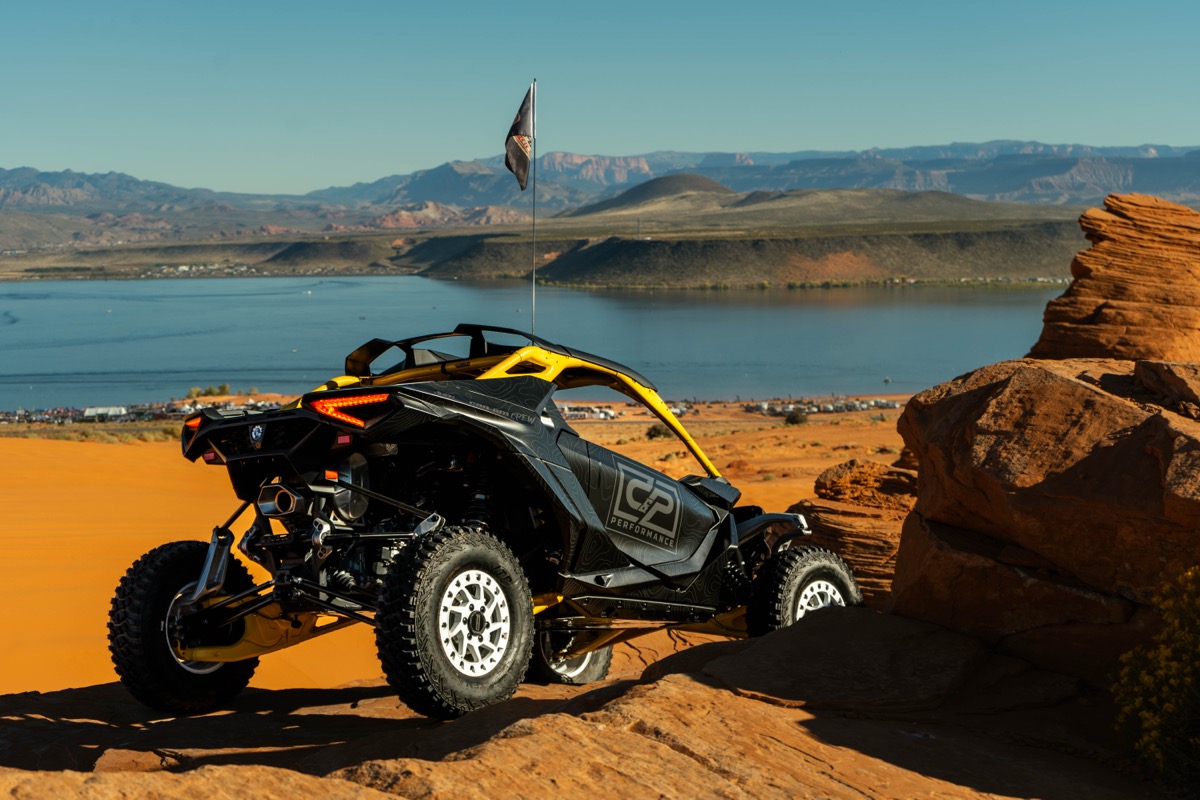
Sand Hollow State Park near Hurricane — sand dunes, slickrock, and the reservoir beach all within the same riding area. The terrain is varied enough that no single setup is perfect for all of it.
The Terrain: What Sand Hollow Actually Throws at You
Sand Hollow isn't just sand dunes. The park has four distinct terrain types, and understanding what each one demands helps you pick the right machine and the right tires.
The Sand Dunes
The dune system at Sand Hollow ranges from gentle rollers to steep, soft faces that test power, momentum, and driver skill. The sand is fine red desert sand — not as loose as Sand Mountain but soft enough that stock all-terrain tires struggle on the steeper climbs. This is where paddle tires and high-horsepower machines earn their keep. Hill climbs, bowl riding, and high-speed dune runs are the draw here.
The Slickrock
The red Navajo sandstone sections provide some of the best rock crawling and slickrock riding in the state. The rock is grippy when dry, treacherous when wet, and requires tires with a hard compound that conforms to the textured surface. This terrain rewards careful driving, good suspension travel, and confidence in your machine's capability. It's a completely different experience from the dunes — slower, more technical, and deeply satisfying when you clean a line.
The Beach and Reservoir Area
The area around Sand Hollow Reservoir offers flatter, more moderate riding along packed sand and dirt trails near the water. This is where families ride, where beginners build confidence, and where you go when the goal is scenery and relaxation rather than adrenaline. The terrain is forgiving and the riding is mellow.
The Trail System
Connecting the dunes, rock sections, and reservoir area is a network of trails that range from packed dirt to loose gravel to rocky washes. These transition zones can be ridden in anything, but they reward a versatile machine that handles both soft and hard surfaces reasonably well.
Which Can-Am for the Dunes: Maverick R and Maverick X3
The Maverick R on sand — purpose-built power, suspension travel, and stability for the terrain that demands the most from both machine and driver.
The dune sections at Sand Hollow want power, suspension travel, and a wide stance. That means the Can-Am Maverick R or the Can-Am Maverick X3 Turbo RR.
Maverick R
The Maverick R is Can-Am's newest sport platform, and it was designed for exactly this kind of riding. The power output, suspension geometry, and chassis design are built for high-speed terrain with big hits and unpredictable surfaces. On Sand Hollow's dunes, the Maverick R has the power to maintain momentum on steep faces and the suspension travel to absorb the landings when you crest a dune faster than expected.
The Maverick R is also wider and more stable than the X3 — which matters on side-hill traverses across dune faces where a narrower machine can feel tippy. For aggressive dune riders who push hard and ride fast, the Maverick R is the current benchmark.
Maverick X3 Turbo RR
The X3 Turbo RR has been the dune king for years, and it remains an excellent sand machine. With 200 HP from the turbo Rotax engine and proven long-travel suspension, the X3 handles Sand Hollow's dunes with authority. The X RS trim with Smart-Shox semi-active suspension adds another dimension — the damping adjusts in real time to changing terrain, which is valuable when you transition from hard-packed sand to a soft bowl in the same run.
For riders who want proven reliability and a massive aftermarket support community, the X3 is a strong choice. For riders who want the latest in chassis design and performance, the Maverick R is the next step. Both machines belong on the dunes.
Dune Setup Essentials
Paddle tires. Rear paddle tires with ribbed sand fronts. This is non-negotiable for the dune sections. Stock all-terrain tires simply don't provide the forward bite needed on steep, loose sand. For more on tire setup, see our tire and wheel guide.
Belt awareness. Sand riding is the hardest environment for a CVT belt. Sand gets into the clutch housing and acts like sandpaper. High-speed runs in deep sand put maximum thermal load on the belt. Carry a spare belt, know how to change one, and plan for a CVT service after any extended sand session.
Air filter. Sand Hollow's fine red dust will pack an air filter faster than mountain trail riding. Check the air filter during the ride day — not after — especially if you're riding in a group where dust clouds from other machines compound the intake.
Flag. [Verify current Sand Hollow State Park requirements for whip flags on OHV vehicles — height, color, and where they must be mounted. Contact the park or visit stateparks.utah.gov for current rules.]
Which Can-Am for Family and Beach: Defender and Commander
Not every Sand Hollow trip is about adrenaline. Some of the best days at the park are the slow ones — kids in the back seat, a cooler strapped down, and no agenda besides exploring the reservoir shoreline and the easier trails. For those days, the right machine is completely different.
Can-Am Defender
The Defender is Can-Am's utility platform, and at Sand Hollow it shines as a family machine. The Defender MAX models seat up to six, have enough cargo bed space for a day's worth of gear, and ride comfortably at the moderate speeds that beach and trail riding demand. The Defender's lower center of gravity and predictable handling make it approachable for less experienced drivers, and the enclosed cab models keep sand and sun off passengers.
For families who ride Sand Hollow regularly, the Defender is the machine that sees the most hours — because it goes to the park every weekend, not just on the days when someone wants to hit the dunes hard.
Can-Am Commander
The Commander splits the difference between sport and utility. It's more fun to drive on the trails than a Defender, with better acceleration and sportier handling, but it still has a rear bed for cargo and enough passenger comfort for a full day. The Commander works well for riders who want a single machine that can handle moderate dune riding, trail exploration, and beach cruising without the extremes of a dedicated sport machine.
Season: When to Ride Sand Hollow
This matters more than most first-time visitors realize.
October through April is the prime riding window. Sand Hollow sits at approximately 3,000 feet elevation near Hurricane, Utah. Summer temperatures regularly exceed 110 degrees Fahrenheit. That heat isn't just uncomfortable for riders — it's dangerous for machines. Engines run hotter, CVT systems are already fighting thermal load from sand riding, and the combination of extreme ambient heat and high-demand riding pushes cooling systems to their limits. Belt failures, overheating, and heat-related breakdowns spike during summer.
The sweet spot is October and November (warm days, cool evenings, excellent sand conditions) and March and April (similar temperatures, longer days). Winter riding is viable but the sand can be wet and heavy after storms, which changes the terrain character — wet sand is heavier to push, and the dune faces ride differently than when they're dry and loose.
Weekdays are significantly less crowded than weekends and holidays, when Sand Hollow draws heavy traffic from the St. George metro area and beyond.
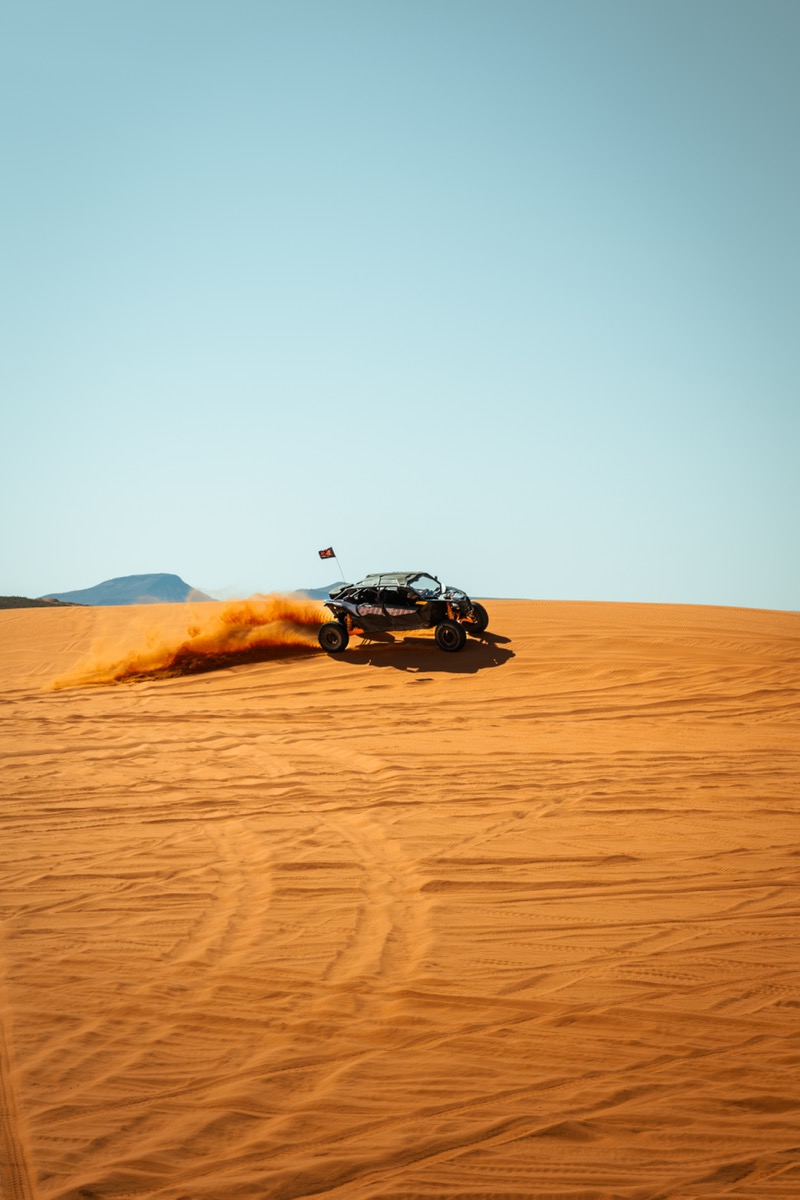
The fall season at Sand Hollow — golden light, comfortable temperatures, and sand conditions that make October through November the best riding months of the year.
Park Basics and Access
[Verify all of the following with Sand Hollow State Park — fees, permits, and rules change periodically. Visit stateparks.utah.gov or call the park directly for the most current information.]
Entry fees: [Day-use fee amount per vehicle — confirm current rate]
Annual pass: [Annual pass availability and cost — confirm]
OHV registration: Utah requires a current OHV registration sticker for all off-highway vehicles on public land. Register through the Utah Division of Motor Vehicles before your trip.
Hours: [Park hours — confirm whether Sand Hollow has specific OHV operating hours or follows standard state park hours]
Facilities: [Restrooms, parking, camping availability — confirm current facilities]
Sand Hollow is located approximately 15 minutes from St. George and about 75 minutes from Cedar City. If you're coming from the Cedar City area, you'll take I-15 south to Hurricane and head east toward the park.
Post-Ride: What Sand Does to Your Machine
This is the part most riders skip — and the part that costs them the most over time.
Sand is abrasive. Fine desert sand works its way into every opening in your machine — the CVT case, the air filter housing, around seals, into bearings, and between the radiator fins. A single day of heavy dune riding at Sand Hollow deposits more abrasive material into your machine than weeks of mountain trail riding.
After Every Sand Day
Clean the air filter. Check it during the ride day if conditions are dusty. After the ride, remove and clean or replace the filter. A sand-packed filter restricts airflow and lets abrasive particles reach the engine.
Blow out the CVT case. Open the belt cover and blow out accumulated sand with compressed air. Sand in the CVT acts like sandpaper on the belt and clutch sheaves, dramatically accelerating wear.
Inspect the belt. Sand riding is the hardest thing you can do to a CVT belt. Check for glazing, cracks, and edge wear. A belt that was fine before a sand day may need replacement after one. For more on belt maintenance and what to look for, see our Maverick X3 service guide.
Rinse the radiator. Sand packs into the radiator fins and reduces cooling efficiency. Rinse carefully with a garden hose — not a pressure washer, which can bend fins and make the problem worse.
Check coolant temperature. If the machine ran hot during the ride day, check the coolant level after it cools. Overheating can push coolant past the overflow cap, and riding with low coolant at Sand Hollow's ambient temperatures is asking for engine damage.
Periodic Service After Sand Riding
If Sand Hollow is a regular destination, shorten your maintenance intervals accordingly. Oil changes, differential fluid checks, wheel bearing inspections, and full CVT service should happen more frequently than the manufacturer's standard intervals. Sand accelerates wear on every component — the maintenance schedule should reflect that.
D&P Performance's service department handles post-sand CVT service, belt replacement, bearing inspection, and full maintenance for all UTV brands — not just Can-Am. Our service department is booked weeks out, so schedule ahead, especially during the busy fall season when Sand Hollow traffic peaks. Call (435) 586-5172 to schedule.
Get Your Machine Sand Hollow Ready
Whether you need paddle tires, a belt replacement before the season, or a full pre-season service, D&P Performance has you covered. We're the closest authorized Can-Am dealer to Sand Hollow and the St. George market, with factory-trained technicians who ride these trails and know what the terrain demands.
For dune riding, a high-performance sport machine like the Can-Am Maverick R or Maverick X3 Turbo RR gives you the power and suspension travel the terrain demands. For family rides along the beach and reservoir, a Can-Am Defender or Commander offers passenger comfort and cargo space. Many regular Sand Hollow riders own both — a sport machine for the dunes and a utility machine for family weekends.
When is the best time to ride Sand Hollow?
October through April. Summer temperatures exceed 110 degrees, which is dangerous for riders and hard on machines — engines overheat, belts wear faster, and cooling systems are pushed to their limits. The fall months (October-November) and spring (March-April) offer the best combination of comfortable temperatures, good sand conditions, and manageable crowds.
Do I need paddle tires for Sand Hollow?
For the dune sections, paddle tires make a dramatic difference — stock all-terrain tires struggle on steep, loose sand. For slickrock and trail sections, you need different tires entirely. Many riders keep two sets of mounted tires and swap depending on the day. If sand riding is occasional, a quality all-terrain is a workable compromise on both surfaces.
How much does it cost to ride at Sand Hollow?
[Verify current fees with Sand Hollow State Park. Day-use fees, annual passes, and OHV-specific access fees are set by Utah State Parks and may change. All OHVs on public land in Utah require a current OHV registration sticker. Visit stateparks.utah.gov for the most current fee schedule.]
Should I service my UTV after riding Sand Hollow?
Yes. At minimum, clean the air filter, blow out the CVT case, inspect the belt, and rinse the radiator after every sand day. Sand is abrasive and accelerates wear on belts, clutch sheaves, bearings, and cooling systems. For regular Sand Hollow riders, shorten maintenance intervals below the manufacturer's standard schedule. D&P Performance offers post-ride CVT service and full maintenance — call (435) 586-5172 to schedule.
Sand riding is hard on drivetrain components. If your belt is slipping or your clutch feels sluggish after a day at Sand Hollow, bring it in for a clutch and belt inspection before your next trip.
Tags:
Sand Hollow
Can-Am
Maverick X3
Maverick R
Defender
Sand Dunes
Southern Utah
Washington County
OHV
Trail Guide