Which Can-Am Should You Buy in 2027? Maverick vs. Defender vs. Commander
Three Can-Am side-by-sides, three different jobs. The Maverick is built for speed, the Defender for work, and the Commander for riders who want both. Here's how to pick the right one for the way you actually ride in Southern Utah.
D&P Performance
3 months ago
You've decided on Can-Am. Smart choice. But now you're staring at three model lines that look completely different and serve completely different purposes — and you need to figure out which one is actually right for the way you ride.
The Maverick is the race-bred sport machine. The Defender is the work-first utility hauler. The Commander sits in the middle — part sport, part utility, built for riders who refuse to pick just one.
We've sold all three out of our Cedar City dealership for years. We've watched customers agonize over this exact decision, and we've watched what happens when someone picks the wrong one. This guide breaks down what actually matters — not marketing copy, but real specs, real terrain, and real ownership costs — so you can walk into the dealership knowing exactly what you want.
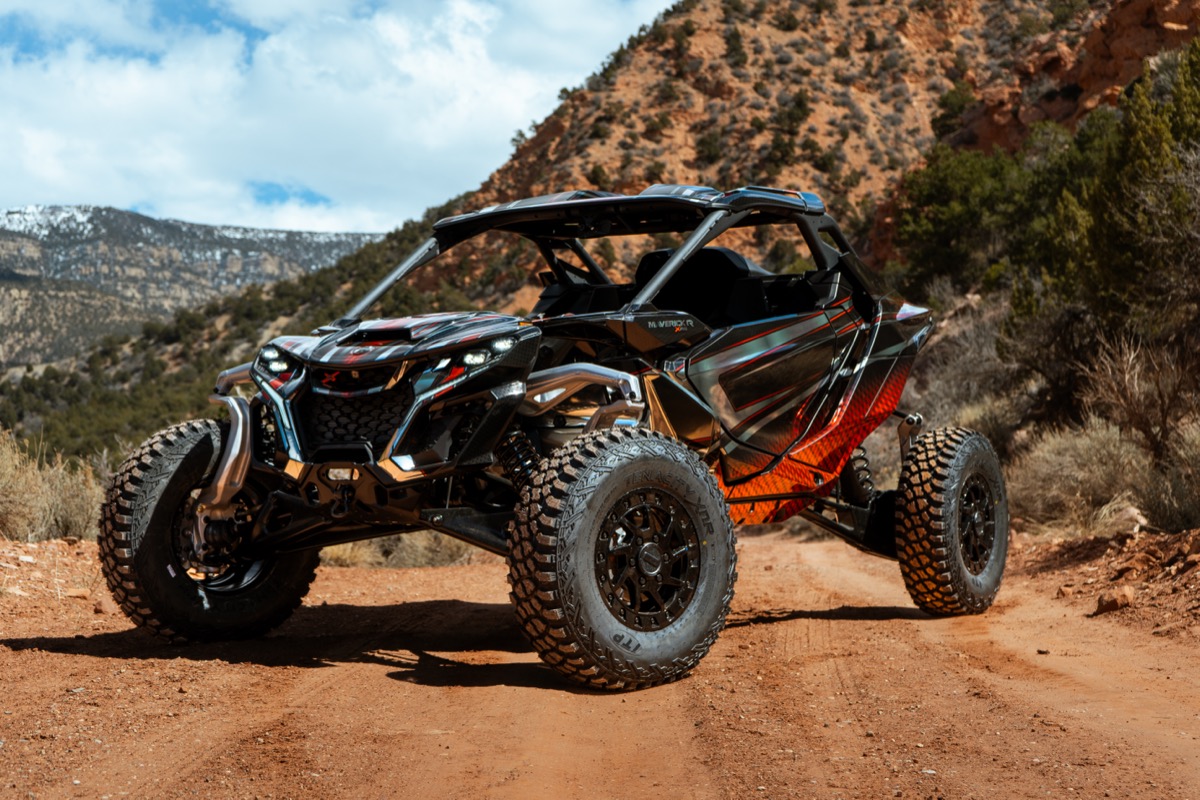
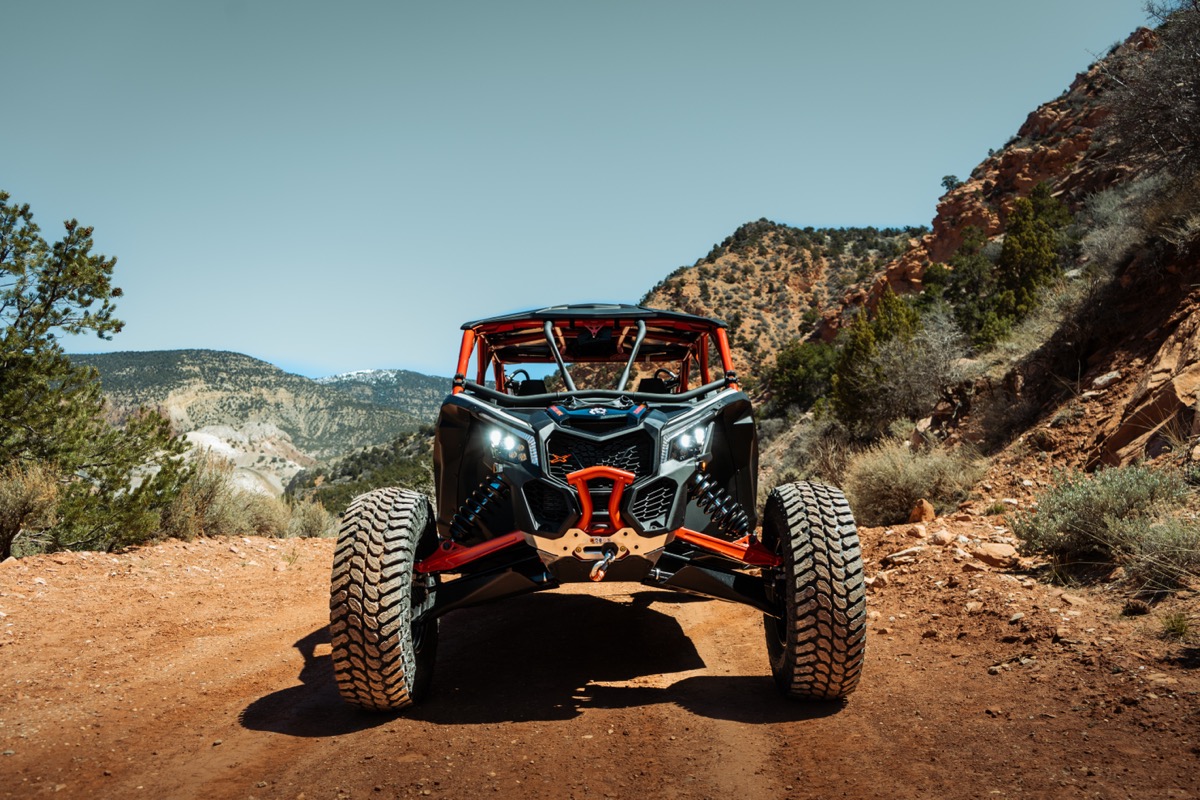
The Maverick X3 isn't subtle about what it's built for — wide stance, long travel, and a turbocharged Rotax that puts 200 horsepower to the ground.
The Maverick line is Can-Am's performance flagship. If you've ever watched a desert race or seen a UTV sending it over dunes, chances are it was a Maverick X3. This is the machine Can-Am builds when the only question is "how fast and how far can the suspension travel?"
Key Maverick Specs
Engine: 200 HP turbocharged Rotax 900 ACE (X3 Turbo RR) — the most powerful production UTV engine on the market
Suspension travel: Up to 25 inches front / 25 inches rear with FOX shocks
Width: Up to 72 inches (X3 X RS models)
Wheelbase: Up to 135 inches (X3 MAX models)
Seating: 2-seat or 4-seat (MAX) configurations
Bed/cargo: Minimal — small rear storage, no dump bed
Towing: Not rated for towing
Starting MSRP: ~$23,000–$32,000+ depending on trim
Who the Maverick Is For
Sand riders. Desert runners. Rock crawlers who want speed between the obstacles. Anyone who looks at Sand Hollow or Coral Pink Sand Dunes and thinks "I want to hit that dune face at full throttle."
The Maverick dominates in open terrain where suspension travel and horsepower determine the experience. The 200-horsepower turbo Rotax doesn't just move the machine — it moves it violently. The suspension soaks up hits that would launch a utility UTV into the air. And the wide stance keeps it planted through corners that would roll a narrower machine.
In Southern Utah, the Maverick shines at Sand Hollow, Coral Pink Sand Dunes, Sand Mountain, and the faster sections of the Paiute Trail. It's also the better choice at altitude — the turbo compensates for thin air above 9,000 feet, maintaining power where naturally aspirated engines start gasping.
Who the Maverick Is NOT For
If you need to haul fence posts, load a deer, tow a trailer, or carry four adults and their gear to a campsite — the Maverick is the wrong machine. It has almost no cargo capacity, no dump bed, and no towing rating. It's a purpose-built sport tool, and it makes zero apology for that.
It's also the most expensive Can-Am to buy and maintain. High-performance turbo engines need more frequent service. Belts wear faster under hard riding. And the aftermarket parts — wheels, tires, suspension components — all carry sport-machine price tags.
The Can-Am Defender: Built to Work
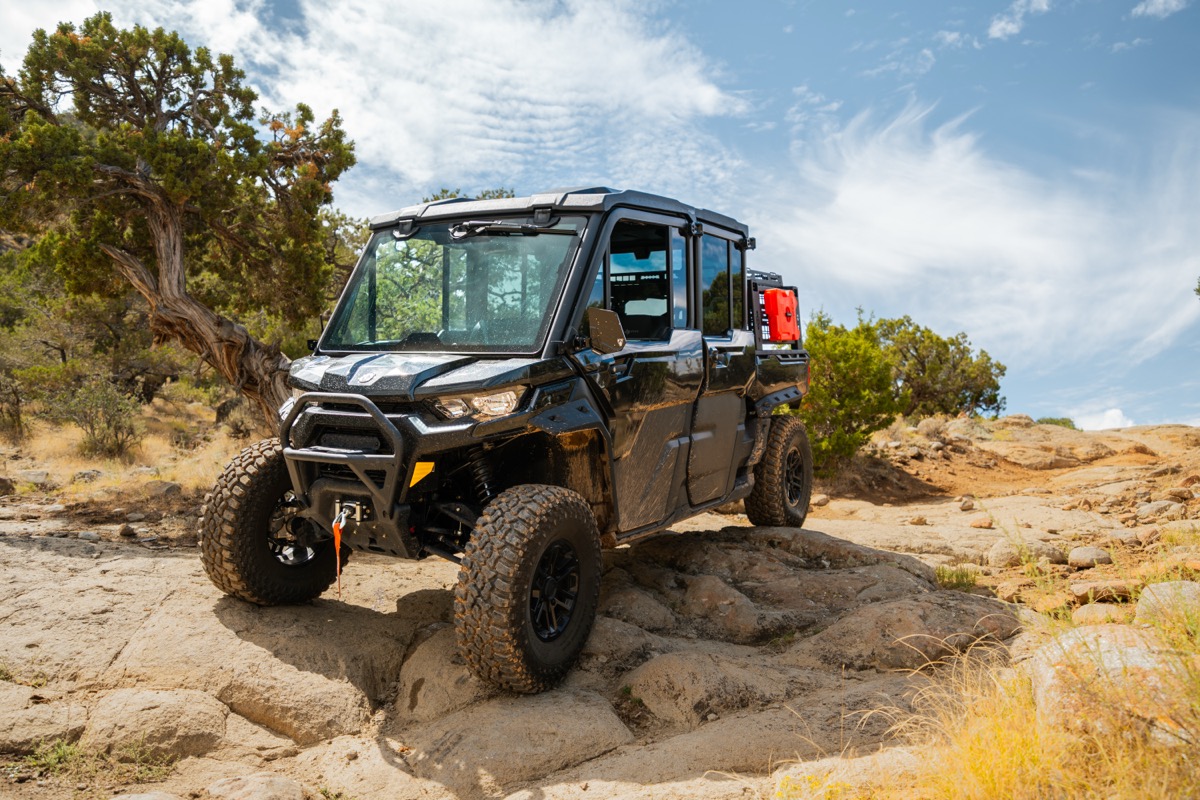
The Defender MAX hauls people, gear, and payload over terrain that would stop a truck — and does it with room for the whole crew.
The Defender is the other end of the spectrum. Where the Maverick is built to go fast, the Defender is built to get things done. It's Can-Am's answer to the ranch truck — a machine that can haul, tow, crawl, and carry a crew through terrain where a pickup truck has no business going.
Key Defender Specs
Engine: 38 HP (HD5) up to 82 HP (HD10) — Rotax V-twin, naturally aspirated
Suspension travel: 10–11 inches front and rear
Width: 62–64 inches
Payload: Up to 1,500+ lbs (bed + passengers)
Towing: Up to 2,500 lbs
Bed capacity: Full dump bed, 600+ lbs rated
Seating: 2-seat, 4-seat, or 6-seat (MAX configurations)
Starting MSRP: ~$14,000–$28,000 depending on trim and configuration
Who the Defender Is For
Ranchers. Property owners. Hunters. Families who need a do-everything machine that works Monday through Friday and hits the trail on Saturday. Anyone whose first question is "how much can it carry?" rather than "how fast can it go?"
The Defender's dump bed is a genuine work tool — 600+ lbs of rated capacity, power-assisted lift on higher trims, and enough room for feed bags, fencing supplies, or a weekend's worth of camping gear. The 2,500-lb towing capacity handles small trailers, equipment, and anything else you need to drag through rough terrain.
On Southern Utah trails, the Defender is the mountain machine. It handles the Brian Head and Cedar Mountain trails with a stability the Maverick can't match at low speeds. The heavier weight and lower center of gravity keep it planted on off-camber ledges. And the cab enclosure options — full doors, roof, windshield, heater — make it a genuine three-season machine in Utah's mountains.
Who the Defender Is NOT For
If you want to rip dunes at Sand Hollow or chase your buddies through a desert wash at 70 mph, the Defender will disappoint you. Ten inches of suspension travel versus the Maverick's twenty-five means you feel every rock and rut at speed. The naturally aspirated engine makes honest power, but it's not making 200 horsepower — and it doesn't pretend to.
The Defender is comfortable at 35 mph on a mountain trail. It's capable at 50 on a graded road. It does not want to be pushed to 80 across open desert. That's not a flaw — it's a design choice. This is a truck, not a race car.
The Can-Am Commander: Built for Both
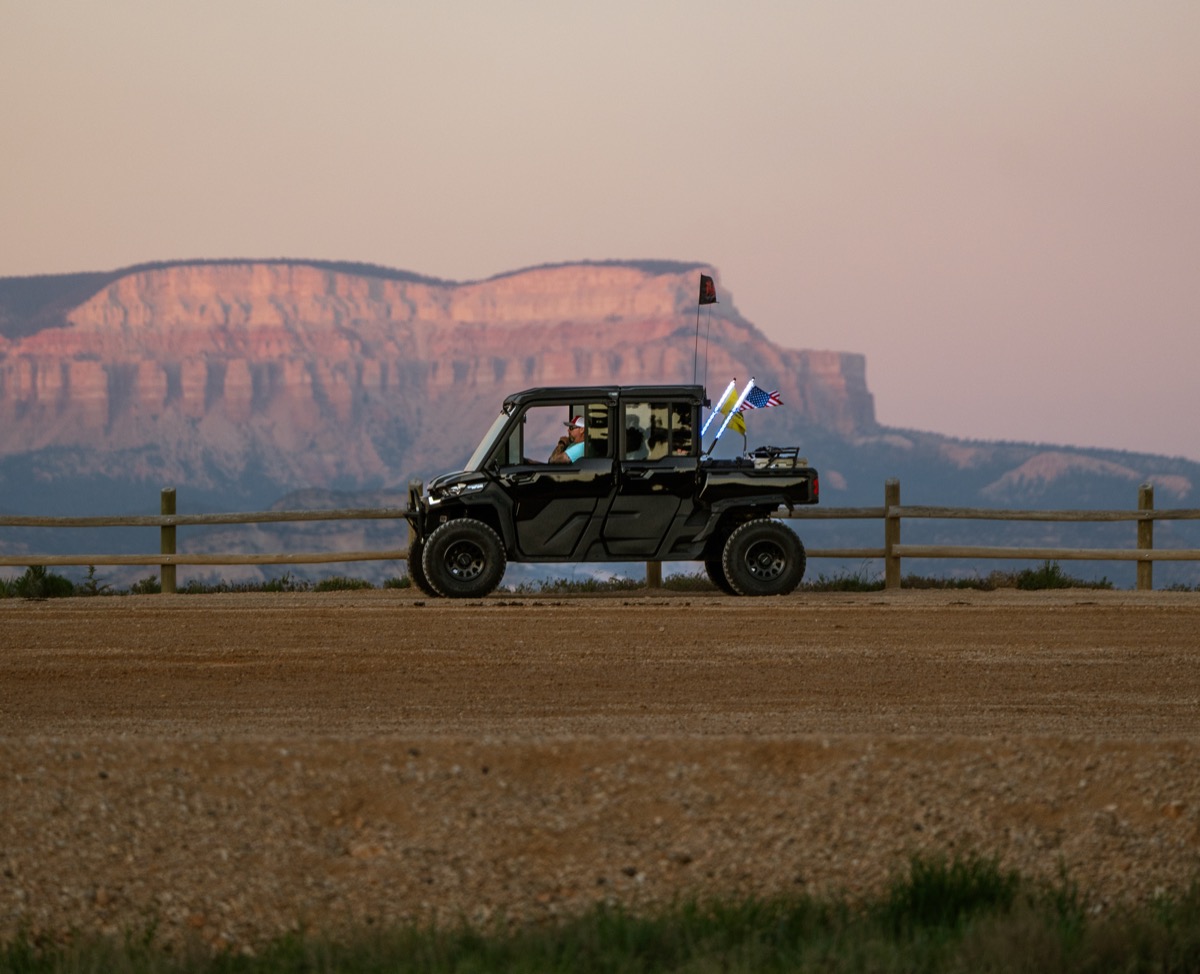
Southern Utah riders don't always fit neatly into "sport" or "work" — the Commander exists for exactly that reason.
The Commander is the compromise machine — and that's not an insult. It's Can-Am's acknowledgment that most riders don't live at the extremes. They want a machine that's fun on the trail Saturday morning and useful on the property Saturday afternoon. The Commander delivers both without excelling at either quite as much as the specialist.
Key Commander Specs
Engine: 92 HP Rotax 1000R V-twin (Commander XT and XT-P) — more power than the Defender, less than the Maverick
Suspension travel: 13 inches front / 13.5 inches rear — noticeably more than the Defender
Width: 64 inches
Payload: Up to 1,200 lbs
Towing: Up to 2,000 lbs
Bed capacity: Dump bed, 600 lbs rated
Seating: 2-seat or 4-seat (MAX) configurations
Starting MSRP: ~$16,000–$24,000 depending on trim
Who the Commander Is For
First-time UTV buyers who aren't sure what they need. Families that want one machine for everything. Riders who enjoy trails but also have work to do. Anyone who looked at the Maverick and thought "that's too much" and looked at the Defender and thought "that's not enough."
The Commander's 92-horsepower Rotax 1000R gives it genuinely fun acceleration — you can feel the difference over the Defender on a trail. The extra suspension travel (13+ inches versus the Defender's 10) smooths out rougher terrain and lets you carry more speed without punishing your spine. But it still has the dump bed, the towing capacity, and the utility bones that make it useful beyond the trail.
It's the machine we see the most versatility from at our Cedar City shop. Commander owners show up with mud on the bed from ranch work, trail dust on the skid plate from a weekend ride, and a grin that says they don't regret not buying the $30,000 Maverick.
Who the Commander Is NOT For
Serious dune riders. The Commander doesn't have the suspension travel or the power to compete with a Maverick in sand. Dedicated ranch operations that need maximum payload and towing — the Defender carries more and pulls more. If you know with certainty that you're buying for one specific purpose, the specialist will always outperform the generalist at that purpose.
But if you're honest about using one machine for multiple jobs, the Commander earns its keep every single weekend.
Head-to-Head Comparison
Here's the quick-reference breakdown:
Feature
Maverick X3
Commander
Defender
Primary purpose
Sport / Performance
Crossover / Versatility
Work / Utility
Max horsepower
200 HP (turbo)
92 HP
82 HP
Suspension travel
Up to 25"
~13"
~10"
Towing capacity
Not rated
2,000 lbs
2,500 lbs
Dump bed
No
Yes
Yes
Crew (4+ seat) option
MAX (4-seat)
MAX (4-seat)
MAX (up to 6-seat)
Best terrain
Sand, desert, high-speed
Mixed trails, moderate terrain
Mountains, rocks, ranch
Price range
$23K–$32K+
$16K–$24K
$14K–$28K
Matching the Machine to Southern Utah Terrain
This is where it gets practical. Southern Utah has dramatically different riding environments within a 90-minute drive of Cedar City, and each one favors a different machine.
Sand Hollow & Coral Pink Sand Dunes → Maverick
Open dunes reward horsepower and suspension travel. The Maverick's turbo power and 25 inches of travel let you commit to steep dune faces and soak up the landing. A Commander can handle light sand riding, but you'll feel the limits quickly on bigger dunes. The Defender should stay on the hardpack edges.
Brian Head & Cedar Mountain → Defender or Commander
Mountain switchbacks, rock ledges, and creek crossings at 9,000+ feet favor stability and low-speed control over raw speed. The Defender's weight and cab enclosure options make it the mountain king. The Commander handles these trails well too, with a slight edge in the sportier sections. The Maverick is overkill — you'll never use 200 horsepower on a 15-mph switchback.
Paiute Trail → Commander
The 2,000-mile Paiute system has everything — graded forest roads, rocky passes, creek crossings, and long-distance stretches. The Commander's mix of comfort, capability, and cargo space makes it the ideal touring machine. You get enough power for the fun sections and enough utility to carry a day's worth of gear and a spare belt.
Ranch & Property Work → Defender
If the machine needs to earn its keep between trail rides — hauling hay, pulling fencing, dragging equipment — the Defender is the only serious option. The Commander can help around a property, but the Defender was designed for it from the ground up.
Cost of Ownership: What Nobody Talks About
The purchase price is only the beginning. Here's what long-term ownership actually looks like across the three lines.
Maintenance Costs
The Maverick's turbocharged engine demands more attention than the naturally aspirated engines in the Commander and Defender. More frequent oil changes, turbo-specific inspections, and higher-grade fluids add up. The drive belt is the most common wear item across all three — but the Maverick chews through belts faster under hard sport riding. Budget $300–$500 per belt replacement.
The Commander and Defender share similar maintenance profiles. The Rotax V-twin engines are proven and relatively simple to service. Regular factory-interval service keeps them running reliably for years.
Insurance
The Maverick costs more to insure — higher value, higher performance, higher risk profile. The Defender and Commander fall into similar brackets. Contact your insurance provider for exact quotes, but expect the Maverick to run 20–30% higher than the other two.
Resale Value
All three Can-Am lines hold value well compared to some competitors, but the Maverick tends to depreciate faster in raw dollars simply because it starts higher. Percentage-wise, the Defender holds its value best — work machines with documented service histories sell quickly in rural Utah.
The One-Machine vs. Two-Machine Question
Here's the real conversation we have with customers at the dealership at least once a week:
"Should I buy one Commander, or save up for a Maverick AND a Defender?"
If budget isn't the constraint, two machines gives you the best of both worlds. A Maverick for sand weekends and a Defender for everything else. No compromise, no "this machine is pretty good at both things but great at neither."
But if you're buying one machine — and most people are — the Commander is the honest answer for 70% of Southern Utah riders. It rides trails well enough to keep you grinning. It works hard enough to justify the payments on weekdays. And it doesn't leave you wishing you'd bought the other thing.
The remaining 30% split between people who know they want pure sport (Maverick) or pure work (Defender). Those buyers don't need this article — they already know.
See all three in person
D&P Performance in Cedar City carries the full Can-Am lineup — Maverick, Defender, and Commander in multiple trims and configurations. We've been a factory-authorized Can-Am dealer since the brand launched, and we've put families in the right machine for 47 years running.
Come sit in all three. Ask the questions this article didn't answer. We'll walk you through the differences, show you what's in stock, and help you figure out which one matches the way you actually ride — not the way the brochure says you should.
The Can-Am Maverick X3 Turbo RR is the fastest, producing 200 horsepower from a turbocharged Rotax engine with up to 25 inches of suspension travel. It's purpose-built for high-speed desert running, dune riding, and sport performance.
Can the Can-Am Defender be used for trail riding?
Yes. The Defender handles trails well, especially mountain trails near Cedar City and Brian Head where the terrain rewards a heavier, more stable machine. It won't match a Maverick's speed or suspension travel, but it's more comfortable for all-day rides and carries more gear.
Is the Can-Am Commander a good first UTV?
The Commander is one of the best first UTVs you can buy. It offers sport-level performance without the aggressive power that can overwhelm a newer rider, plus practical utility features like a dump bed and 2,000 lbs of towing capacity. If you plan to do a mix of trail riding and property work, the Commander handles both.
What is the towing capacity of Can-Am side-by-sides?
The Defender leads with up to 2,500 lbs. The Commander tows up to 2,000 lbs. The Maverick is not rated for towing — it's built for performance, not hauling. If towing matters, the Defender or Commander are your options.
Where can I test ride Can-Am side-by-sides in Utah?
D&P Performance in Cedar City is a factory-authorized Can-Am dealer with the full Maverick, Defender, and Commander lineup. Call (435) 586-5172 to schedule a visit — we'll walk you through all three and help match the right model to your riding style.
Tags:
Can-Am
Maverick
Defender
Commander
UTV Comparison
Side by Side
Southern Utah
Cedar City
Buyer Guide