Few things ruin a ride faster than a shredded CVT belt. One minute you're climbing a grade, the next you hear a loud pop, lose power, and start coasting to a stop with smoke curling out from under your UTV. If you've been there, you know — and you probably know that a "cheap" belt failure can turn into a very expensive clutch repair if the debris takes out your primary.
The good news: belt and clutch problems almost always give you warning before they strand you. Burnt-rubber smell, a high-pitched squeal under load, a loss of acceleration, a chatter on takeoff — your machine tells you the belt is tired long before it comes apart. The trick is knowing what to listen and look for.
This guide walks you through everything we tell customers in the service bay: how to spot a failing belt, how the CVT actually works, what clutch service involves, what belts really last on each brand, and what a proper belt-and-clutch job costs. No fluff, no upsell.
Signs Your UTV Belt Needs Replacing
Your CVT belt rarely fails without warning. These are the signals — learn them.
The Smell
Burnt rubber coming from under your machine after a hard climb or a heavy load is the single most reliable early warning sign. A healthy belt at normal temperature shouldn't smell like anything. If you're catching that distinctive hot-rubber odor — especially after low-range climbing or when you've been working the machine — your belt is overheating, slipping, or both.
The Squeal or Chatter
A high-pitched squeal on takeoff, or a chattering vibration as you pull away from a stop, usually means your belt is glazing, your clutches are contaminated, or your belt is slipping on the sheaves. Some chatter in cold weather is normal for the first few feet. Persistent chatter is not.
The Slip
Pin the throttle and watch the tach. If your engine RPM climbs but your ground speed doesn't, you're slipping. A worn belt loses grip on the clutch sheaves, which means engine power isn't making it to the wheels. You'll notice this most on hills, in soft sand, or when towing.
The Visual
Pull the clutch cover (or have us do it during inspection). A belt with cracked sidewalls, frayed edges, missing chunks, glazing (a shiny, polished surface instead of a matte one), or significant width loss is ready to be replaced. Most modern belts have a minimum width spec in the service manual — we measure every belt we inspect and compare against that number.
The Codes
Newer fuel-injected UTVs often throw belt-related error codes or put the machine into a reduced-power "limp" mode when the belt temperature sensor sees trouble. If your dash is warning you about belt temp, don't ignore it. That light exists because belt failure is expensive.
If you smell burnt rubber, stop riding.
A slipping or overheating belt won't just fail — it can take your primary clutch, secondary clutch, and clutch cover with it when it finally lets go. The difference between a $300 belt job and a $2,000+ clutch rebuild is often whether you kept riding after the warning signs.
How a CVT Actually Works (In Plain English)
CVT stands for continuously variable transmission. Instead of fixed gears like a truck, your UTV uses two variable-width pulleys (called clutches or sheaves) connected by a rubber-and-cord drive belt. Change the width of the pulleys and you change the effective gear ratio — smoothly, without shifting.
Three main parts:
- Primary clutch (drive clutch). Mounted on the engine. Uses spring pressure and centrifugal weights to squeeze the belt as RPM rises. More RPM means more squeeze, which pushes the belt toward the outer edge of the sheaves.
- Secondary clutch (driven clutch). Mounted on the transmission input. Uses a spring and a cammed ramp to respond to torque demand. When the primary squeezes the belt outward, the secondary lets the belt ride deeper into its sheaves — giving you a taller gear for speed.
- Drive belt. The rubber-and-cord link between the two clutches. Takes all the abuse — heat, friction, bending, contamination. This is the consumable in the system.
The clutches themselves aren't supposed to wear quickly. The belt is designed to be the sacrificial part, the way brake pads are designed to wear before the rotors. But if a belt gets neglected, fails catastrophically, or gets contaminated with oil, water, or debris, the damage doesn't stop at the belt — it spreads to the clutches.
Belt Replacement vs. Clutch Service: What's the Difference?
Customers often use these terms interchangeably. They're different jobs.
Belt Replacement
The simpler job. Remove the clutch cover, take the old belt off the primary and secondary, install a new belt, reinstall the cover. On most machines this is a 1–2 hour job if everything is in good shape.
A belt replacement alone is appropriate when:
- Your belt is approaching its mileage/hour life but the clutches look clean
- You need emergency replacement before a trip
- The belt is worn but hasn't failed violently
Full Clutch Service
The thorough job. Remove both clutches from the machine. Disassemble the primary — inspect rollers, weights, springs, and sheave surfaces. Disassemble the secondary — inspect the cam/helix, spring, and sheave surfaces. Clean everything. Measure everything against spec. Replace worn components. Reinstall with a new belt.
Full clutch service is appropriate when:
- Your belt failed catastrophically (shredded, burnt, took chunks out)
- You've put 500+ hours on the machine without a clutch service
- You ride at high altitude or in heavy dust (that's Cedar City)
- You've got chatter or slip that a new belt alone doesn't fix
- You're prepping for a big trip or selling the machine
Brand-Specific Belt Life Expectations
Every manufacturer publishes belt life estimates, but those numbers assume flat terrain and moderate loads. Here's what we see in the real world, on Cedar City trails:
| Brand & Model |
Realistic Belt Life in Southern Utah |
| Can-Am (Maverick, Defender) |
1,500–2,500 miles or 100–150 hours under hard use |
| Polaris (RZR, Ranger) |
1,000–2,000 miles, shorter on Turbo models under load |
| Honda (Talon, Pioneer) |
2,000–3,000+ miles — Honda clutching is conservative and belts last |
| Yamaha (Wolverine, Viking, Grizzly) |
2,500–4,000+ miles — the Ultramatic is famously long-lived |
| Kawasaki (Teryx, KRX, Mule) |
1,500–2,500 miles under mixed use |
| CFMOTO (ZForce, UForce) |
1,000–2,000 miles depending on model and riding style |
These numbers assume reasonable riding — not all-day rock crawling in low range, not pulling trailers up Cedar Mountain at full weight, not running the machine at redline in deep sand. Push any of those conditions and belt life drops fast.
What D&P's Clutch Service Includes
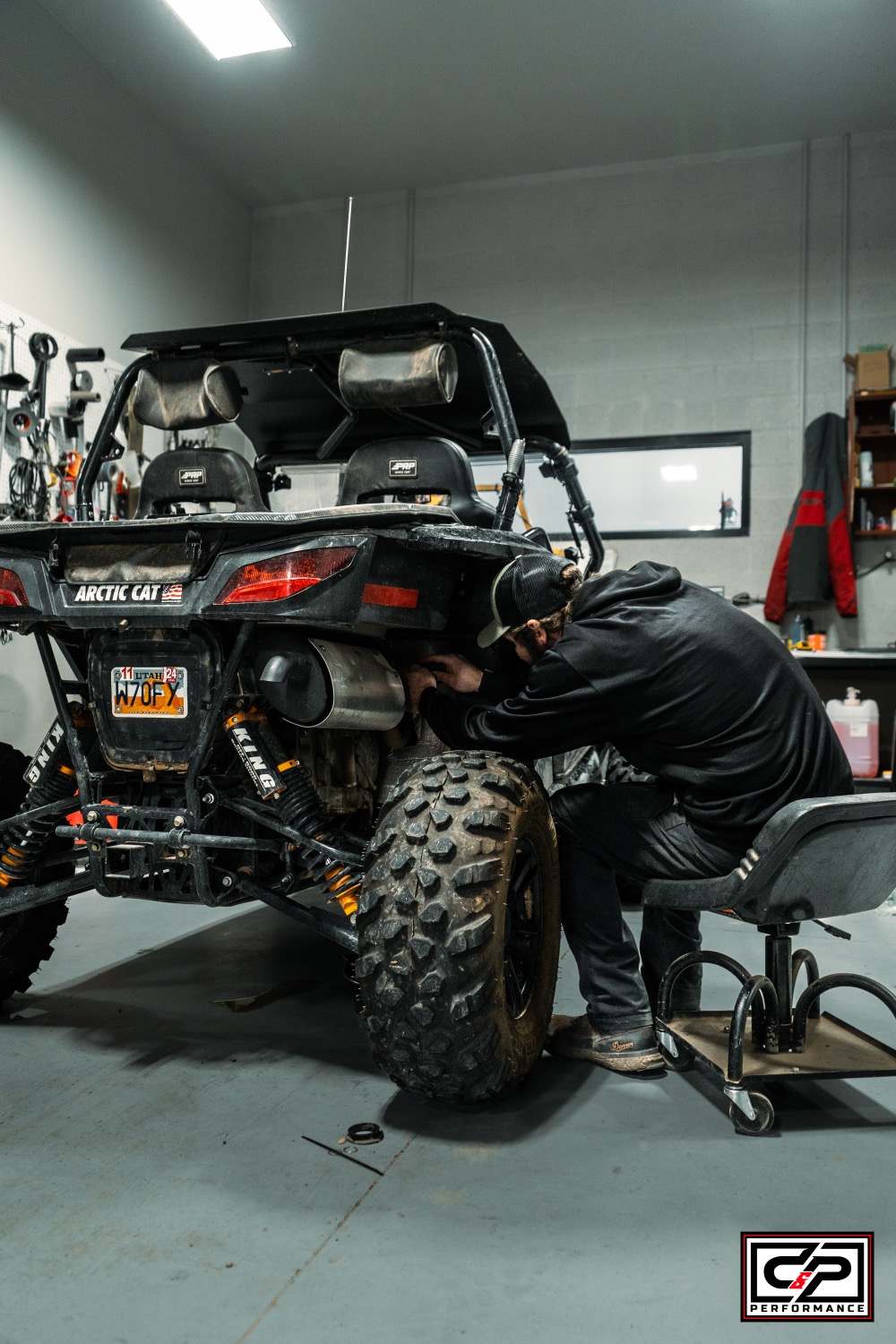
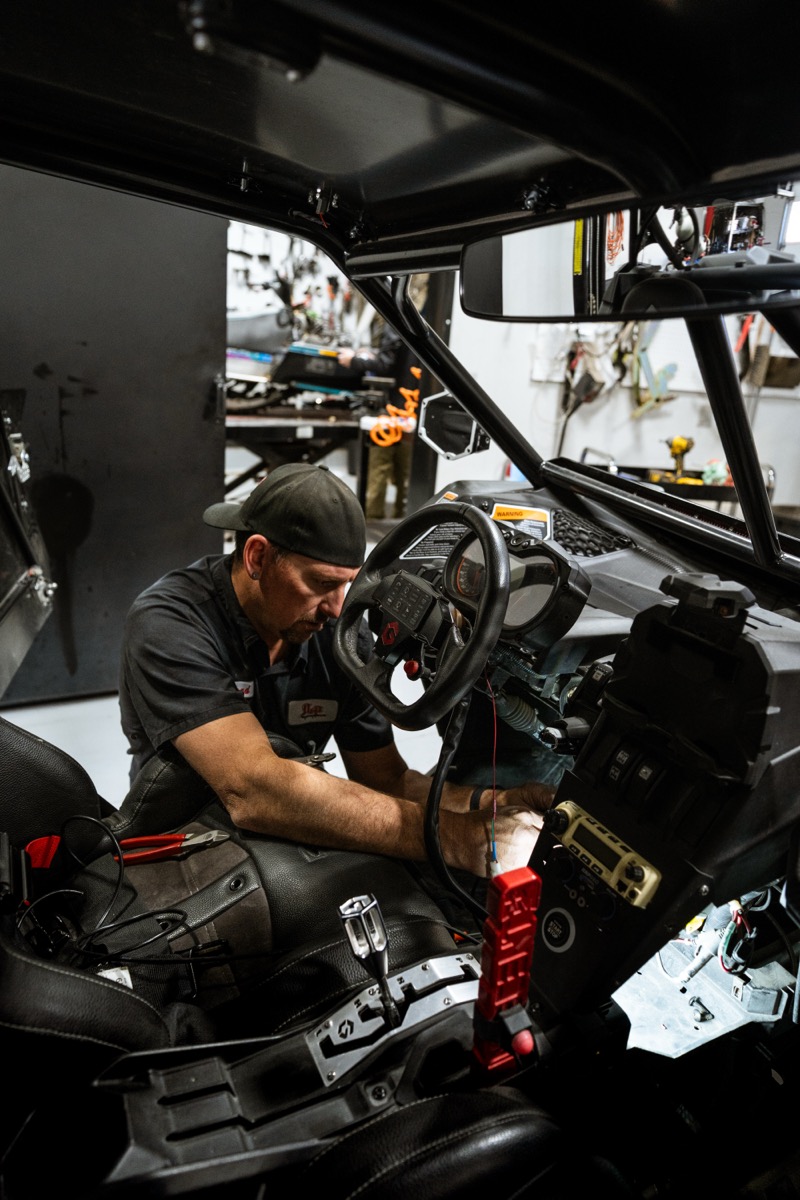
When you book a clutch service with us, here's what actually happens to your machine:
- Remove. Pull the clutch cover. Pull the primary clutch off the crankshaft using the correct pullers. Pull the secondary clutch off the transmission shaft.
- Disassemble. Break down both clutches to component level. No shortcuts, no "just clean the outside."
- Inspect. Look at every sheave face for burn marks, scoring, or wear. Check rollers and weights for flat spots. Check springs for fatigue. Check the cam/helix on the secondary for wear ridges. Check bushings and bearings.
- Clean. Solvent-clean every surface that touches the belt. Dust, belt residue, and oil contamination all reduce clamping force — and Southern Utah produces a lot of all three.
- Measure. Compare wear components against the manufacturer's service-limit specs. If rollers are out of spec, they get replaced. If spring rates have drifted, we flag it.
- Reinstall. Torque to spec. Install the new belt with the correct deflection. Reinstall clutch cover with a fresh gasket if needed.
- Test. Road test the machine. Confirm smooth engagement, no chatter, no slip, and correct engagement RPM.
Why Cedar City Eats Belts Faster
If you ride mostly around Cedar City, your belt life is probably shorter than the manufacturer's brochure number. Three reasons:
Altitude
At 5,800+ feet elevation — and even higher if you ride Brian Head, Cedar Breaks, or the Markagunt — your engine makes less power. To move the same load, it has to spin at higher RPM, which means more belt speed and more heat. Over time, that accelerates belt wear.
Dust
Southern Utah dust is fine, abrasive, and relentless. Even with sealed CVT systems, dust finds its way into clutch housings and acts like sandpaper on belt surfaces and sheaves. A shop that doesn't clean out clutch housings during service is leaving contamination that will kill the next belt prematurely.
Heat
Long climbs in low range — the kind you do on almost every Cedar City trail — generate enormous belt heat. Heat softens the rubber, reduces grip, accelerates glazing, and shortens life. Some riders can extend belt life significantly just by learning to avoid prolonged low-range full-throttle climbs and letting the machine cool between hard sections.
What Does Belt & Clutch Service Cost?
Exact pricing depends on your machine, but here's the honest range:
- Belt-only replacement (healthy clutches): typically in the $200–$400 range including parts and labor.
- Full clutch service with new belt: typically in the $400–$700 range depending on what we find.
- Clutch rebuild after catastrophic belt failure: often $800–$2,000+ once you factor in damaged sheaves, bent components, and OEM parts.
The math is simple: a belt service every 100–150 hours is cheaper than a clutch rebuild every few years. It's the single highest-return piece of preventive maintenance you can do on a UTV.
Why Quality Parts Matter
Not all belts are equal. OEM and premium aftermarket belts use higher-grade rubber compounds, stronger cord construction, and tighter manufacturing tolerances. Cheap belts look identical but fail early, run hotter, and sometimes shed debris that damages your clutches. We stock OEM and reputable premium aftermarket options — we don't put bargain-bin belts in customer machines.